Managing excess inventory isn't just a storage issue - it impacts your finances, operations, and brand image. Here are seven methods to handle overstock effectively while minimizing waste and maximizing returns:
-
Sell on B2B Surplus Marketplaces
Platforms like ForthClear connect you with bulk buyers, helping you sell inventory quickly. These marketplaces reduce waste and provide better returns than recycling or discarding goods. -
Donate to Non-Profits
Donating items to organizations benefits communities and reduces waste. Plus, it offers tax deductions and lowers carrying costs. -
Repurpose into New Products
Transform unsold inventory into new offerings by rebranding or bundling items. This extends product life and recovers value. -
Offer Deep Discounts and Flash Sales
Clear inventory fast with limited-time sales. While profits may be lower, this method keeps products in circulation and reduces storage costs. -
Recycle Materials Responsibly
For unsellable items, recycling recovers raw materials and aligns with waste-reduction goals. Electronics, apparel, and batteries are common candidates. -
Partner with Liquidation Companies
Liquidators buy excess stock and redistribute it. This clears space quickly while recouping some costs. -
Bundle with Active Inventory
Combine overstock with popular products to increase sales and move inventory without steep discounts.
Quick Comparison
| Method | Waste Reduction | Revenue Recovery | Ease of Implementation | Setup Time |
|---|---|---|---|---|
| B2B Marketplaces | Moderate | High | Moderate | Moderate |
| Donations | High | Low (tax perks) | High | Fast |
| Repurposing | High | Moderate | Moderate | Slow |
| Discounts/Flash Sales | Low | High | High | Fast |
| Recycling | High | Low | High | Moderate |
| Liquidation | Moderate | Moderate | Moderate | Fast |
| Bundling | Moderate | Moderate | High | Fast |
Choose the method(s) that align with your business goals, whether it’s maximizing revenue, reducing waste, or complying with regulations. Each strategy has its trade-offs, but combining approaches can often yield the best results.
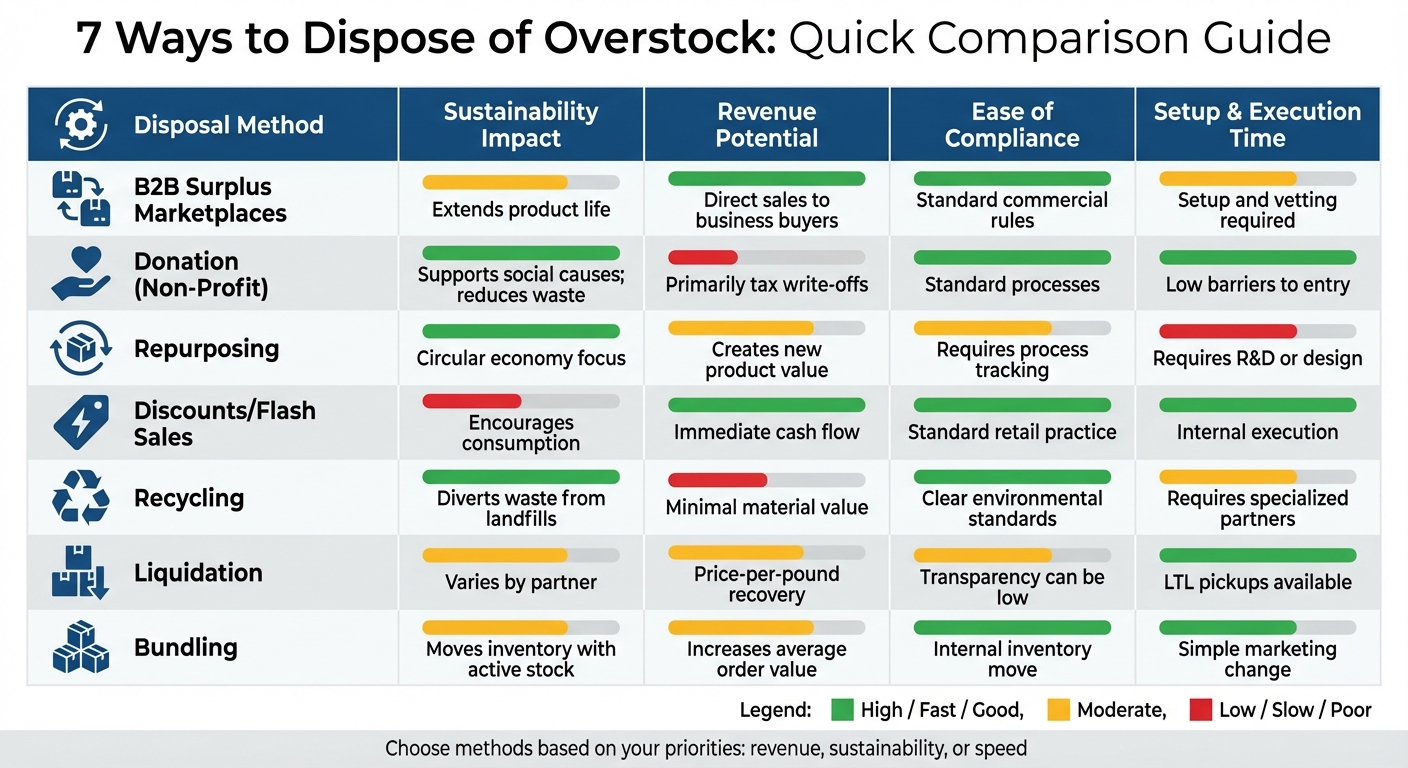
Comparison of 7 Overstock Disposal Methods: Sustainability, Revenue, Compliance & Speed
Unused Inventory? Here’s How to Turn It into Profit (Instead of a Problem)
sbb-itb-bc600a0
1. Sell on B2B Surplus Marketplaces like ForthClear
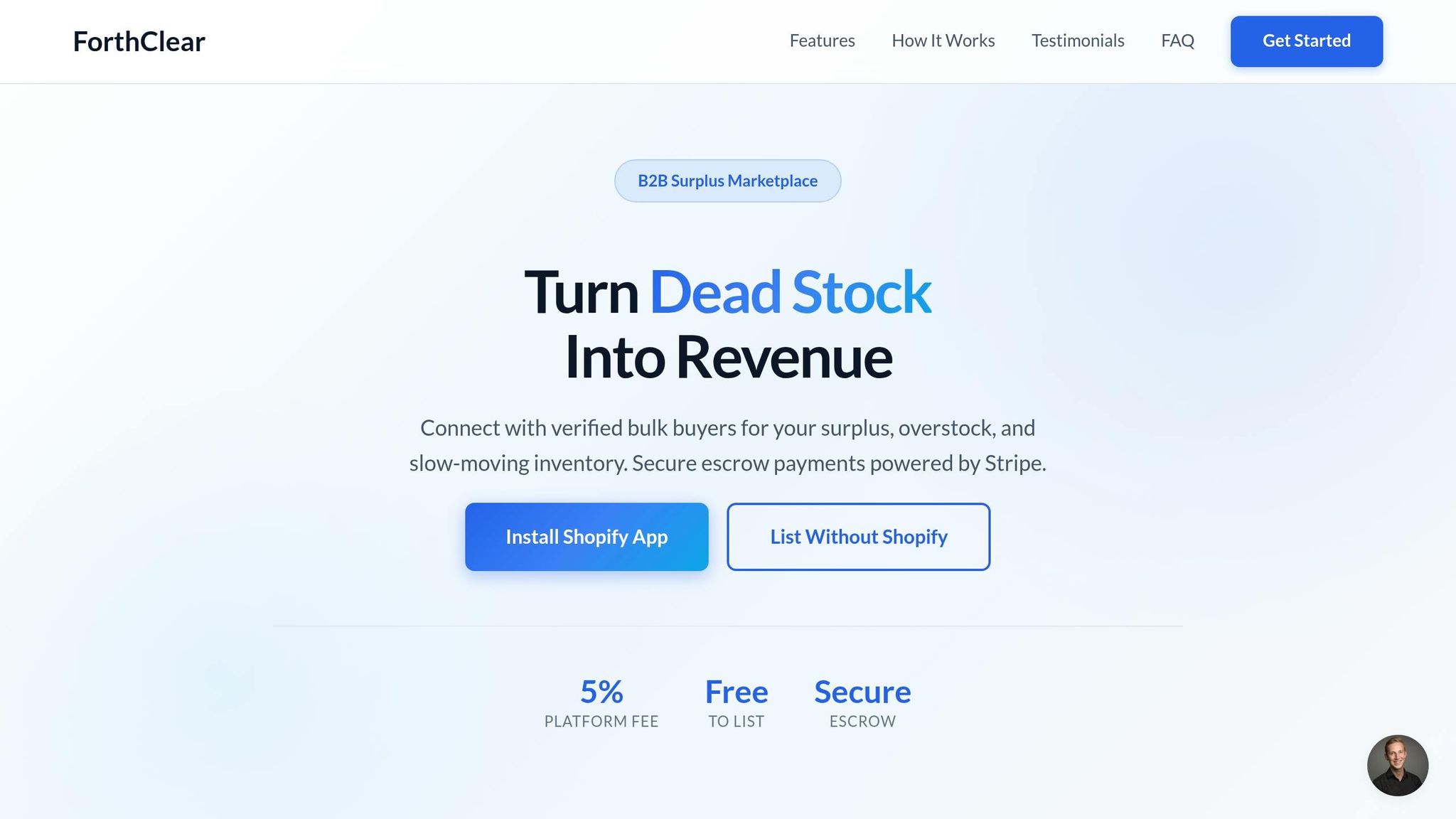
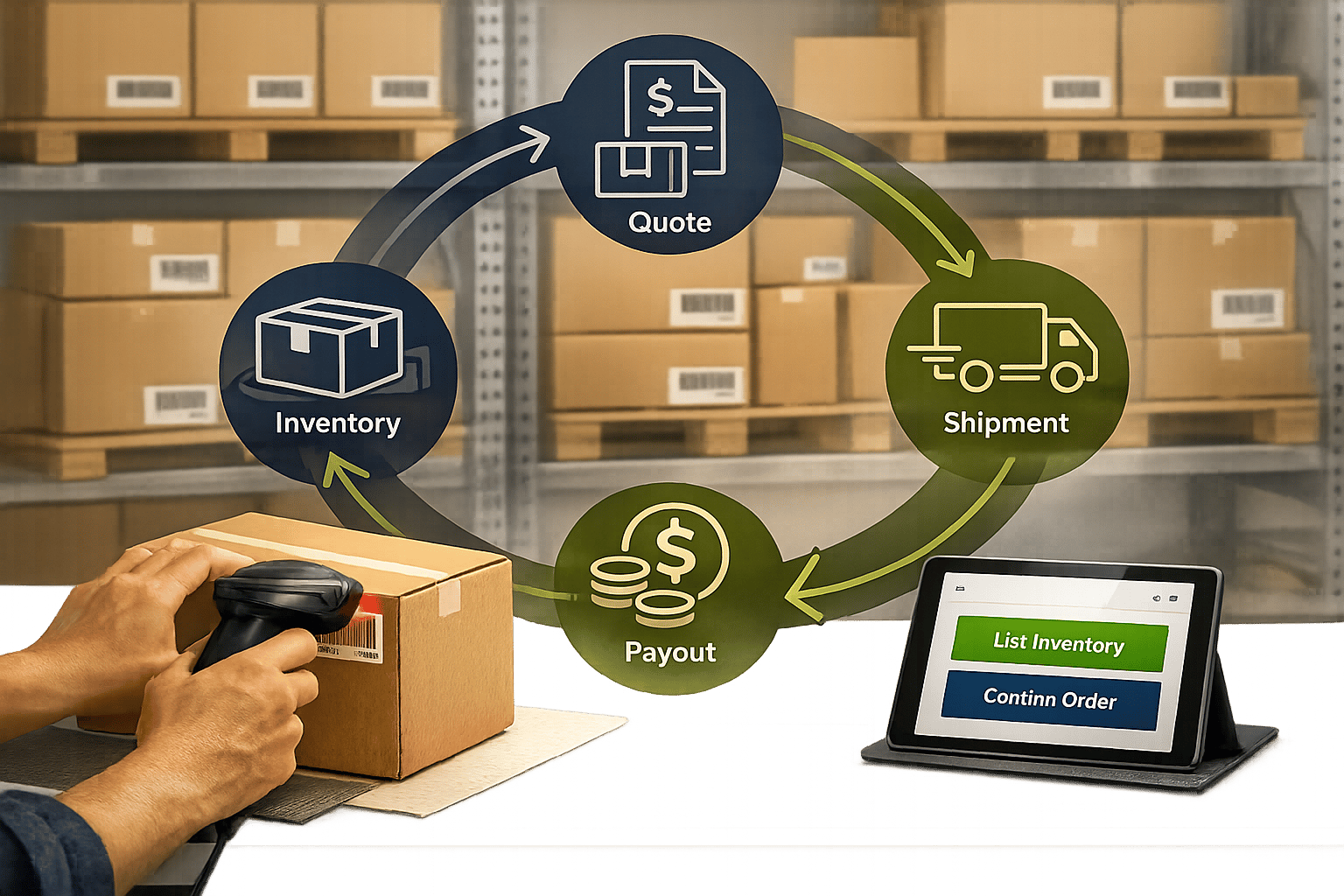
B2B surplus marketplaces are a practical way to connect with verified bulk buyers actively looking for overstock items. These platforms are tailored to help businesses move excess inventory quickly and efficiently. Take ForthClear, for instance - it offers a Shopify integration that identifies unsold products (sitting for 60+ days) and lists them in just minutes.
Sustainability Benefits
Selling surplus inventory through these marketplaces ensures products stay in use rather than ending up as waste. This approach reduces the unnecessary consumption of raw materials, energy, and water, aligning with circular economy principles. By finding a new purpose for your overstock, you’re contributing to a more sustainable business model.
Earning Potential
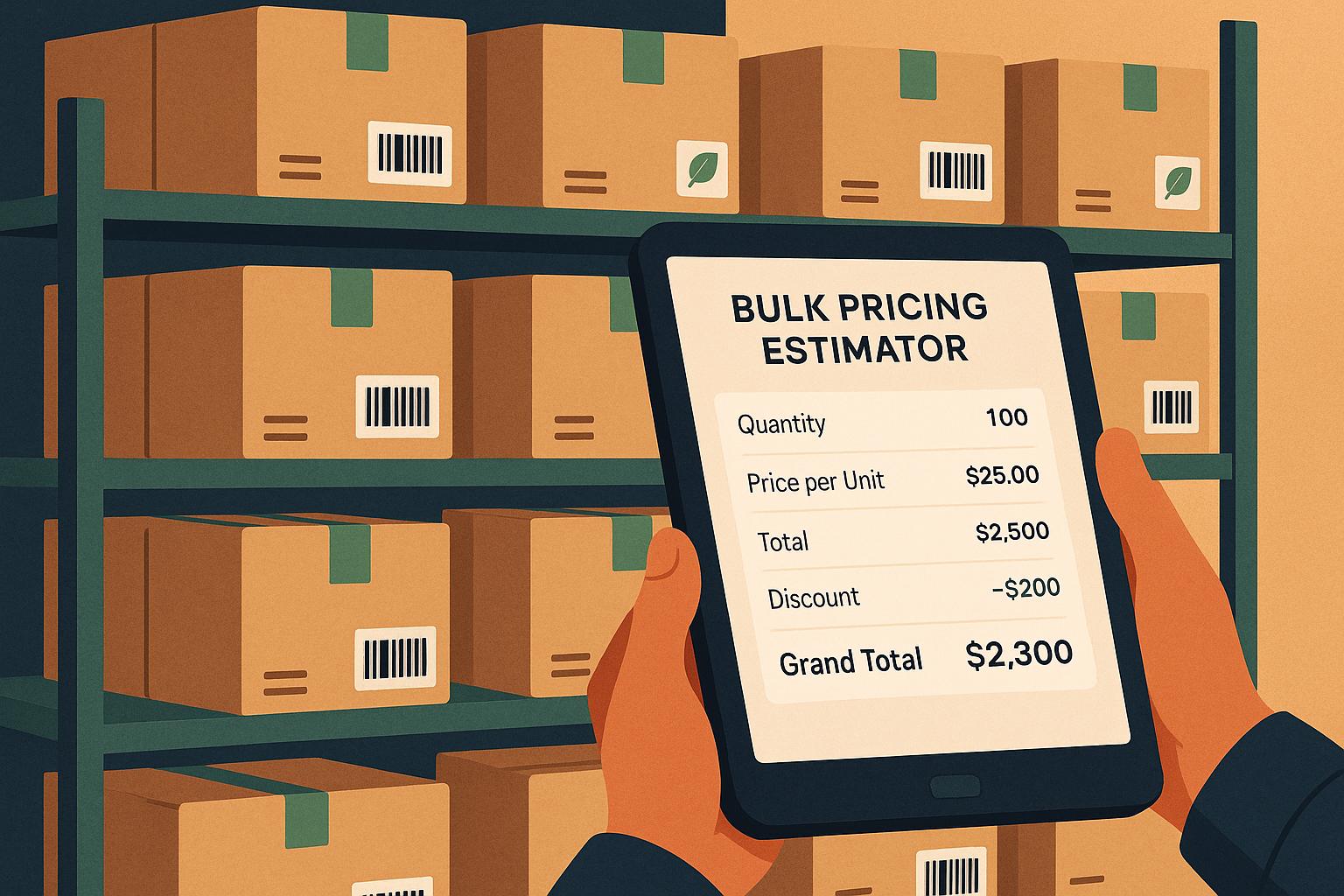
While you might not achieve the full retail price for your items, B2B marketplaces generally provide better returns than recycling or discarding inventory. ForthClear, for example, charges a 5% platform fee per sale without requiring upfront listing fees. The platform also allows you to set tiered bulk pricing, encouraging larger orders and helping you clear inventory faster.
Quick and Easy Setup
Getting started is straightforward. If you’re on Shopify, the ForthClear app integrates directly with your store, syncing inventory and flagging unsold items automatically. For non-Shopify users, uploading a CSV file and using the platform’s auto-image search feature simplifies the process of assigning product photos. Payments are handled securely through Stripe escrow, ensuring funds are safely held until delivery is confirmed.
Simplified Compliance
Using an established marketplace like ForthClear can help you navigate regulatory requirements, particularly those related to waste reduction. The platform handles transaction security and provides built-in tariff estimates for international sales, making cross-border transactions easier. Plus, its listing tools streamline updates to product details, improving visibility to potential buyers. This hassle-free system not only supports sustainability but also sets a solid foundation for implementing other eco-friendly practices.
2. Donate to Non-Profit Organizations
Donating overstock items to nonprofits keeps products in use while benefiting local communities. This is especially effective for items like clothing, home goods, school supplies, and electronics, which can directly support charitable efforts. Beyond reducing waste, this approach enhances a company’s commitment to social responsibility. For example, the National Association for the Exchange of Industrial Resources (NAEIR), under CEO Gary C. Smith, has facilitated donations from over 8,000 U.S. corporations, redistributing more than $3 billion worth of goods to schools and nonprofits since its founding.
Sustainability Impact
Donating inventory gives products a second life and helps reduce waste. Consider this: over 9.6 million tons of clothing end up in U.S. landfills each year. Redirecting these goods to nonprofits not only minimizes waste but also cuts down on transportation-related CO2 emissions. Plus, companies that align themselves with sustainability and social causes often enjoy a 20% boost in consumer loyalty. In fact, 77% of consumers are more inclined to support businesses that prioritize these values.
Revenue Potential
While donations don’t directly boost sales, they come with substantial financial perks. C-corporations can claim enhanced tax deductions under IRC Section 170(e), which allows for the inventory cost plus half the difference between cost and fair market value, capped at twice the cost basis. Additionally, donations reduce carrying costs by 20–30% and can save companies up to 60% when compared to the expenses of landfilling or liquidating excess inventory.
Compliance Ease
To qualify for tax benefits, donations must go to IRS-approved 501(c)(3) nonprofit organizations. Businesses should keep thorough records, including item descriptions, costs, market values, and written acknowledgments for donations over $250. For non-cash contributions valued above $5,000, a qualified appraisal is required. Working with intermediaries like NAEIR can simplify the logistics and documentation process, making compliance much more manageable.
Implementation Time
Donating is often quicker than other disposal methods like flash sales or liquidations. Organizations such as NAEIR can review and approve donation proposals within 72 hours, making it easier to clear out inventory. Once approved, you can arrange for pickup or delivery based on the nonprofit’s capacity. Ensuring the nonprofit can handle your donation volume is essential to avoid logistical hiccups. This streamlined process fits well alongside other fast inventory clearance strategies discussed later.
3. Repurpose into New Products
Repurposing transforms unsold inventory into new products by giving them a fresh purpose through rebranding or repackaging. This strategy extends the lifecycle of products without the hefty expense of creating entirely new product lines. It’s a smart way to turn potential losses into usable capital. For instance, slow-selling journals can be marketed as "Gratitude Books" for wellness campaigns, or seasonal items can be updated to match current trends. This not only recovers value from unused inventory but also supports more sustainable supply chain efforts.
With simple steps like cleaning, minor repairs, or repackaging, inventory can be revitalized without requiring significant investments. Another effective tactic is bundling: pairing slow-moving products with popular ones to create "value kits." These curated offerings help move inventory faster while appealing to customers.
Sustainability Impact
Repurposing has a meaningful environmental benefit by extending product lifecycles and keeping usable goods out of landfills. It’s been shown to cut CO2 emissions by 60% to 80% compared to manufacturing new items. This aligns with circular economy principles, which are becoming even more critical as companies face increasing pressure to meet Environmental, Social, and Governance (ESG) standards.
Revenue Potential
This approach helps businesses maximize returns on their original investments by extracting value from idle inventory. Repurposing can generate 15%–30% more value than traditional liquidation methods. By reducing storage costs and freeing up working capital, companies can recover funds that might otherwise be lost. As highlighted by Liquidation Stock:
Recommerce is no longer a side project. It is the engine of modern commerce. It allows businesses to combine profitability with purpose, turning linear supply chains into regenerative ecosystems
.
Compliance Ease
While repurposing offers financial benefits, it’s also important to meet regulatory requirements. Products must comply with all relevant environmental, health, safety, and national security regulations. Clear labeling is often necessary to disclose prior ownership or the product's refurbished nature, ensuring transparency and maintaining customer trust. Regular audits - at least once a year - can help businesses identify outdated inventory that could be repurposed before losing all value. Additionally, implementing standardized quality checks and certified refurbishment programs minimizes legal and warranty risks. These practices align with broader strategies for environmentally responsible disposal.
Implementation Time
Repurposing is a cost-effective and efficient way to handle unsold inventory. Since it uses existing stock rather than relying on new manufacturing, it offers a quicker path to market compared to traditional product development. Automated grading systems can speed up the process by 15%–25%, making it an attractive option for rapid inventory clearance. Simple steps like minor repairs or repackaging ensure that this method competes well with other fast disposal strategies.
4. Offer Deep Discounts and Flash Sales
Deep discounts and flash sales are a fast and effective way to clear out excess inventory, recover revenue, and cut down on storage costs. Instead of resorting to wasteful destruction practices, these sales keep products in circulation, maintain cash flow, and reduce the financial strain of holding onto unsold goods. Acting quickly during seasonal transitions can also help businesses avoid rising storage fees.
This approach requires a mindset shift - viewing surplus stock as an opportunity rather than a burden. By weighing the costs of storage and depreciation against potential earnings from discounted sales, businesses can make smarter decisions. Plus, being transparent about why products are discounted can build trust and loyalty with customers. Leveraging digital platforms for flash sales allows companies to reach bargain hunters quickly, making it easier to move inventory while aligning with broader sustainability goals.
Revenue Potential
Flash sales are a practical way to recover some of the investment tied up in unsold goods. While these sales won't bring in full retail value, they still generate revenue that offsets initial costs and frees up working capital for new inventory purchases. This method also avoids the hidden expenses of waste disposal, recycling, and environmental cleanup.
Sustainability Impact
Flash sales help extend the life of products without requiring additional manufacturing, which is a win for waste reduction efforts. According to Integrity Recycling Waste Solutions:
The destruction of unsold goods accounts for millions of tons of waste annually, much of which ends up in landfills or incinerators, releasing greenhouse gases and toxins into the environment.
By keeping products in use, businesses preserve the resources - like water, energy, and raw materials - already invested in their production. This aligns with the US EPA's source reduction principles, considered the top priority in waste management.
Compliance Ease
Flash sales also prepare businesses for stricter regulations on product disposal. For instance, the EU has banned the destruction of certain unsold non-food items. By adopting discount sales now, companies can stay ahead of emerging circular economy requirements and avoid future penalties. This proactive strategy not only ensures compliance but also reinforces a commitment to environmental responsibility.
5. Recycle Materials Responsibly
If selling or donating surplus inventory isn’t an option, recycling offers a practical way to recover materials while cutting down on waste. This approach is especially effective for items like electronics, apparel, batteries, and metals, which are often found in excess inventory. The trick lies in identifying recyclable materials and navigating the proper regulatory processes to handle them correctly.
The U.S. produces a staggering 2.01 billion metric tons of waste each year, with manufacturing and retail industries contributing significantly to this number. Responsible recycling can significantly reduce this impact. For example, specialized recycling platforms manage to divert over 1,000 tons of waste from landfills annually.
Sustainability Impact
Recycling plays a major role in waste reduction by reclaiming raw materials that would otherwise require resource-intensive extraction. Electronics, for example, often contain valuable metals like gold, silver, and platinum, which can be recovered. Unsellable apparel can be repurposed through fiber recycling or refurbished and sold by the pound to liquidators. Even lithium-ion batteries from tools and smartphones have well-established recycling processes.
This practice also conserves the energy and resources already invested in production, aligning with the goals of the United Nations Sustainable Development Goal 12, which emphasizes sustainable consumption and production.
Compliance Ease
Recycling isn’t just about reducing waste - it’s also about following the rules. The Resource Conservation and Recovery Act (RCRA) provides guidelines for handling recyclable materials, particularly those classified as hazardous waste. Programs like the Universal Waste Program simplify compliance for items such as batteries, fluorescent lamps, mercury-containing equipment, and aerosol cans. Some materials, like properly stored shredded circuit boards free of mercury switches, are even exempt from full RCRA regulation.
Keep in mind that state regulations can be stricter than federal ones, so always check local policies before proceeding. For electronics, ensure they are drained of fluids and cleaned of visible residue before sending them to recyclers. This step helps maintain compliance and ensures that materials are processed correctly.
Revenue Potential
Recycling isn’t just about doing the right thing for the planet - it can also recover some monetary value. While it may not be as lucrative as selling surplus inventory, there’s still value to be found. Precious metals reclaimed from electronics, for example, are treated as valuable commodities and often fall under reduced regulatory requirements. Unsellable apparel can be sold in bulk by weight, typically negotiated on a price-per-pound basis. Businesses using specialized recycling methods also report an average 50% reduction in storage costs.
However, not everything can be recycled or resold. Budget for disposing of the 10% to 20% of items that don’t qualify for recycling. Items containing lithium-ion batteries may incur hazmat surcharges ranging from $15 to $30 per shipment.
Implementation Time
Setting up a recycling program takes some initial effort but quickly becomes a routine process. Start by identifying which items in your surplus inventory are recyclable. Look for hazard labels, radioactive stickers, or biohazard symbols to determine how materials should be handled. Regional guides and vendor databases can help you locate the appropriate recycling streams. For chemicals or lab supplies, consider internal exchange programs to redistribute unused items before resorting to disposal.
The time required to establish these protocols depends on the type and volume of materials. Work with qualified recyclers to ensure compliance and streamline the process for ongoing recycling efforts.
6. Partner with Liquidation Companies
Liquidation companies purchase excess inventory and redistribute it through secondary channels. This approach can be a quick and effective way to clear out warehouse space while recouping some of the investment tied up in slow-moving or outdated stock.
Sustainability Impact
Liquidation keeps products in use instead of sending them to landfills or incinerators, aligning with increasing regulatory demands to reduce waste. For instance, France has banned the destruction of unsold goods, requiring companies to reuse, donate, or recycle them. Similarly, Germany mandates businesses to justify how they dispose of excess inventory. These policies reflect a broader push toward environmentally responsible practices.
Research from the Journal of the Academy of Marketing Science highlights that choosing non-destructive disposal methods, like liquidation, can improve how consumers perceive a brand, whereas wasteful practices, such as incineration, can harm a company’s reputation. The stakes are high - just look at adidas, which found itself with $1.3 billion worth of unsold Yeezy-branded inventory in 2022 after a terminated partnership. Meanwhile, consumer movements like #RetailMadeMe and SustainUS continue to pressure brands to adopt more ethical disposal methods.
Revenue Potential
Liquidation offers a way to recover some of your investment while avoiding conflicts with your primary sales channels. Different models provide varying balances between speed and recovery value:
- Direct Buyers: The fastest option, offering immediate cash but lower returns per unit.
- Auction Marketplaces: Competitive bidding helps reveal true market value, though you have less control over the buyers.
- Structured Models: These take longer but can maximize recovery by considering brand sensitivity and channel health.
"The objective isn't simply to move products. It's to recover capital while protecting pricing integrity, listings, and overall channel health." - Sellbery
One example comes from ERC's Director of Operations, Ron B., who worked with SELLinventory.com to liquidate over 800 pallets and 40 trailers of inventory. The results were swift - ERC sent an invoice on Tuesday and received payment by Wednesday.
Compliance Ease
Liquidation partners can help you navigate environmental regulations and maintain proper financial records. It’s essential to evaluate inventory annually and adjust financial statements if market value drops below cost. Accurate SKU documentation and clear manifests are key to this process.
Before entering an agreement, ask where your inventory will be redistributed. This helps you avoid violating distributor agreements or creating pricing conflicts in your existing sales channels. For sensitive inventory, choose partners who offer discreet placements or off-market exits to protect your brand’s reputation and pricing structure.
Implementation Time
The time required depends on the liquidation model you choose. Direct buyers offer the quickest solution - you submit your inventory, receive an offer, schedule pick-up, and get paid. This method provides immediate relief for your warehouse and helps maintain a healthy inventory turnover ratio.
Structured or auction-based approaches take more time but can yield higher returns or better price discovery. As the global liquidation services market is expected to grow to $6,699.61 million by 2033, with a compound annual growth rate of 6.015%, businesses will have more options and tailored services to meet their specific needs.
Now, it’s time to weigh these methods and decide which one best suits your overstock management strategy.
7. Bundle with Active Inventory
Bundling is a clever way to pair overstock items with popular products, creating enticing offers that clear out slow-moving inventory while adding value for customers. This tactic not only frees up warehouse space but also supports cost recovery efforts and aligns with sustainable practices like the circular economy.
Sustainability Impact
Bundling directly supports the "Reuse" and "Reduce" principles of the circular economy. Instead of discarding perfectly usable items, this method extends their lifecycle by pairing them with best-sellers, giving them a new purpose alongside in-demand products.
"Reusing helps reduce the amount of waste that ends up in landfills. It also saves you money since you don't need to buy a new item to replace something that still has value."
This approach also reduces the strain on storage. With global municipal solid waste expected to rise from 2.1 billion tonnes in 2023 to 3.8 billion tonnes by 2050, every item kept in circulation counts. Beyond its environmental benefits, bundling can also contribute to your bottom line.
Revenue Potential
Unlike deep discounts that eat into profits, bundling allows you to recover nearly full value from slower-moving inventory. By encouraging customers to purchase multiple items at once, you not only clear stock but also boost your average order value.
"Create combos that pair slow-moving items with moderate-demand ones. This boosts cart value and helps clear stock efficiently."
- Mazin Mohammed, Author, Surplus Market
Customers often see bundles as a smart deal - getting more for their money makes the purchase feel rewarding. This strategy helps maintain the pricing integrity of your active inventory while the overstock items serve as added value.
Implementation Time
One of the best things about bundling is how quickly it can be put into action. All it takes is updating product listings or adjusting in-store displays. Start by sorting your inventory into slow-moving and moderate-demand categories, then set bundle prices that highlight savings while increasing order value. Use real sales data to identify which pairings work best and tweak your offerings accordingly.
Comparison of Disposal Methods
Choosing the right disposal method depends on what matters most to your business: revenue, environmental goals, regulatory compliance, or speed. Each option comes with its own set of trade-offs across four main areas: sustainability impact, revenue potential, ease of compliance, and the time it takes to set up and execute.
The table below breaks down seven disposal methods based on these metrics. As Charles Cushing of StartOps puts it, "There's more than one bottom line", highlighting the need to weigh multiple factors before deciding. For example, flash sales can bring in quick revenue but do little for environmental goals, while recycling helps reduce landfill waste but typically generates low returns. Use this comparison to decide which method aligns best with your priorities.
| Disposal Method | Sustainability Impact | Revenue Potential | Ease of Compliance | Setup & Execution Time |
|---|---|---|---|---|
| B2B Surplus Marketplaces | Moderate: Extends product life | High: Direct sales to business buyers | High: Standard commercial rules | Moderate: Setup and vetting required |
| Donation (Non-Profit) | High: Supports social causes; reduces waste | Low: Primarily tax write-offs | High: Standard processes | Fast: Low barriers to entry |
| Repurposing | High: Circular economy focus | Moderate: Creates new product value | Moderate: Requires process tracking | Slow: Requires R&D or design |
| Discounts/Flash Sales | Low: Encourages consumption | High: Immediate cash flow | High: Standard retail practice | Fast: Internal execution |
| Recycling | High: Diverts waste from landfills | Low: Minimal material value | High: Clear environmental standards | Moderate: Requires specialized partners |
| Liquidation | Low/Moderate: Varies by partner | Moderate: Price-per-pound recovery | Moderate: Transparency can be low | Fast: LTL pickups available |
| Bundling | Moderate: Moves inventory with active stock | Moderate: Increases average order value | High: Internal inventory move | Fast: Simple marketing change |
Traditional liquidation methods often lack transparency, leaving questions about where items ultimately end up. On the other hand, structured donation services provide better insight into how products are used after disposal. If you're managing sensitive materials like electronics, it's crucial to work with partners who ensure a secure chain of custody. This helps you meet environmental compliance, protect data, and safeguard your brand reputation - all while staying committed to sustainability.
These comparisons highlight how important it is to balance sustainability, compliance, and profitability when managing excess inventory.
Conclusion
Managing excess inventory isn't just about freeing up warehouse space - it’s about protecting your brand reputation, staying compliant with regulations, and achieving financial goals. The seven disposal methods outlined here cater to different business needs, whether that’s generating quick revenue through flash sales or focusing on long-term environmental responsibility with recycling and donation programs.
The right choice depends on your priorities. If immediate cash flow is your goal, consider B2B surplus marketplaces or offering steep discounts. For a more environmentally conscious approach, donation, repurposing, or recycling can help you avoid the backlash associated with wasteful practices. As Charles Cushing of StartOps puts it, "There's more than one bottom line". Balancing environmental impact, compliance, and profitability is key. For example, flash sales can improve cash flow, while recycling supports eco-friendly initiatives.
This decision is becoming increasingly important as global regulations tighten. France has banned the destruction of unsold goods, and Germany requires companies to justify disposal methods. These laws reflect shifting consumer expectations. Studies show that destructive practices like incineration can harm brand perception, as customers often view them as wasteful - even when they’re used to create product scarcity. Non-destructive approaches not only clear inventory but also uphold brand integrity.
With regulations and consumer expectations evolving, your inventory disposal strategy plays a crucial role in shaping future perceptions. Align your method with your brand’s identity and values. Often, the most effective approach combines multiple methods, striking a balance between speed, environmental responsibility, and profitability. Whether dealing with small or large volumes of overstock, a thoughtful plan ensures you meet business objectives without compromising what your company stands for.
FAQs
Which disposal method is best for my type of overstock?
The best way to handle overstock depends on the type of materials and their potential impact on the environment. Recycling works well for materials like plastics, metals, and paper, helping to cut down on waste while giving these items a second life. For items that can't be recycled or are hazardous, options like donation or repurposing can help extend their usefulness. By focusing on eco-friendly methods, you can dispose of overstock responsibly and reduce harm to the planet.
How do I avoid hurting my brand when clearing excess inventory?
To safeguard your brand's reputation and maintain customer trust, it's essential to choose disposal methods carefully. Consider these options:
- Liquidation through trusted channels: Work with established partners to sell excess inventory without compromising your brand's integrity.
- Collaborating with reliable marketplaces: Partner with platforms known for managing surplus stock responsibly.
- Donating to charities: Giving unsold goods to charitable organizations not only helps communities but also reflects positively on your brand.
For defective or damaged products, ensure secure destruction to prevent unauthorized use or illegal resale. Steer clear of unregulated disposal methods or questionable reselling practices, as these can damage your brand's credibility and public image.
What records do I need for donations, recycling, or liquidation compliance?
To stay compliant, maintain detailed records of items you donate or dispose of, along with their value and proof that they meet tax or regulatory guidelines. Key documents to keep include:
- Receipts: Evidence of the donation or disposal.
- Inventory records: A detailed list of the items, including descriptions and values.
- Proof of use: Documentation showing the items were used for charitable purposes or recycled properly.
These records are crucial for claiming tax deductions or meeting regulatory standards.