The global refurbished electronics market is expanding fast, driven by affordability and eco-conscious buying trends. Valued at $93.7 billion in 2024, it’s expected to reach $169.5 billion by 2030, growing at a 10.4% CAGR. Emerging markets, particularly in Asia-Pacific and Africa, are leading this growth, with high demand for affordable devices and structured sales platforms reshaping the landscape.
Key insights:
- Asia-Pacific: Accounts for 50% of the global market. India’s refurbished electronics market is projected to grow from $1.7 billion in 2024 to $3.1 billion by 2033, with laptops and smartphones leading the charge.
- Africa: The recommerce market is set to grow from $2.6 billion in 2025 to $4.08 billion by 2029. Refurbished smartphones dominate, often costing 50% less than new models, helping expand digital access.
- Consumer trust is improving due to warranties, certifications, and digital platforms like ForthClear, which provide secure transactions and verified suppliers.
Both regions face challenges like fragmented regulations in Asia-Pacific and informal supply chains in Africa. However, government initiatives and growing e-commerce platforms are addressing these issues. This creates a promising opportunity for businesses to tap into these burgeoning markets.
The rise of the second-hand smartphone market
sbb-itb-bc600a0
1. Asia-Pacific Refurbished Electronics Market
Asia-Pacific's growth highlights the expanding opportunities within the refurbished electronics market.
Market Growth Rates
The Asia-Pacific region accounts for an impressive 50% of the global refurbished electronics volume. The refurbished laptop market alone was valued at $2,163.22 million in 2024 and is expected to reach $3,888.1 million by 2033, with a CAGR of 6.73%. India emerges as a standout performer, with its refurbished electronics market projected to grow at a CAGR of 6.83%, rising from $1,706.4 million in 2024 to $3,097.36 million by 2033. Refurbished smartphone sales in India surged by 35% in 2023, underscoring the sector's momentum. These figures paint a clear picture of a market on the rise.
Consumer Drivers
Affordability remains the key factor driving consumer interest. In India, the average price of a refurbished mobile phone was $84.76 in 2021, compared to $170.96 for a new device - a striking 50% price difference. A 2022 Cashify White Paper emphasized this trend:
For 70% of customers, affordability is the primary factor to purchase refurbished cell phones in India.
This cost advantage, paired with growing middle-class aspirations, has fueled demand for branded refurbished electronics. Additionally, the shift to remote work and online learning has increased the need for refurbished laptops and tablets, particularly among students and small businesses. These trends are supported by the region's robust supply chain.
Supply Chain Strengths
Asia-Pacific's manufacturing infrastructure gives it a competitive edge in the refurbished electronics market. China leads in refurbished smartphone production, acting as a global hub for regional and international supply. Specialized repair facilities in the region help lower processing costs. Major OEMs like Samsung and Lenovo have developed certified refurbishment and trade-in programs, ensuring a steady flow of high-quality used devices. Meanwhile, e-commerce platforms now account for over 60% of refurbished sales, using AI-driven grading systems to build consumer trust. For instance, in October 2023, HP Inc. introduced a refurbished laptop program in India, collaborating with certified vendors to offer affordable devices with after-sales support.
Regulatory Environments
Regulations are also shaping the market landscape. Variations in testing and warranty standards can increase operational costs by 10–15%. The lack of organized standards for repair shops and testing protocols in some countries adds to consumer skepticism. However, governments are taking steps to support the circular economy. In 2024, China implemented e-waste regulations aiming to recycle 50% of its electronic waste by 2025. Both India and China now provide tax incentives for businesses involved in electronics refurbishment. In February 2023, Samsung launched its "Galaxy Certified Refurbished" line, offering restored smartphones through official channels to target budget-conscious premium buyers.
2. Africa Refurbished Electronics Market
Africa's refurbished electronics market is growing rapidly, with the smartphone sector leading the charge. This surge is fueled by increasing consumer interest, expanding recommerce networks, and more structured supply chains.
Market Growth Rates
The recommerce market in Africa is expected to grow from $2.6 billion in 2025 to around $4.08 billion by 2029, reflecting an annual growth rate of 11.9%. In early 2025, Africa recorded a 6% year-over-year increase in refurbished smartphone sales, leading the global market in this category. Adoption rates vary significantly across the continent: by 2024, used phones made up 60% of all phone sales in Kenya, while Nigeria and South Africa each reached 40%. During this time, Kenyan startup Badili expanded its reach under the "Bridge by Digital Africa" initiative, a government-supported program aimed at formalizing the refurbished electronics sector.
This impressive growth highlights the strong consumer demand for affordable devices.
Consumer Drivers
Affordability is a major factor driving the demand for refurbished electronics in Africa. These devices typically cost about 50% less than new models. For example, in Kenya, refurbished smartphones are available for as little as $45, with nearly 80% of these devices priced under $100. In contrast, new entry-level smartphones range between $99 and $116. High inflation - exceeding 8% in Kenya - and the rising cost of premium devices, often exceeding $1,000, have further encouraged consumers to turn to the secondary market. With only 25% of Sub-Saharan Africa's population using mobile internet, refurbished smartphones play a critical role in expanding digital access.
Additionally, the transition from informal street vendors to structured platforms offering professional testing, grading, and short-term warranties has boosted consumer confidence. For instance, in 2024, refurbished phone sales on the e-commerce platform Jumia grew by 40% year-over-year.
Supply Chain Strengths
Africa's supply chain for refurbished electronics is still rooted in informal networks and physical hubs, such as Lagos's Computer Village. However, structured digital platforms are beginning to gain traction in cities like Nairobi and Johannesburg. Emerging startups are helping to formalize these supply chains by sourcing, refurbishing, and reselling devices with warranties. Major brands like Samsung and Xiaomi have also introduced trade-in programs to maintain a steady flow of pre-owned devices. Meanwhile, digital marketplaces such as Jumia, Jiji, and PigiaMe are streamlining the fragmented peer-to-peer resale process in urban areas.
Despite these advancements, areas like reverse logistics still require further development.
Regulatory Environments
Government initiatives are playing a pivotal role in shaping the refurbished electronics sector. Kenya's "Bridge by Digital Africa" program, for example, has helped standardize operations and improve quality control. Efforts to manage electronic waste are also influencing policy, with projects like Rwanda's e-waste plant and cleanup initiatives in Ghana's Agbogbloshie serving as key examples. In Nigeria, local assembly policies have stabilized prices and reduced the impact of import duties. However, only 1% of the 2.9 million tons of electronic waste generated annually in Africa is officially recycled. Experts suggest that reducing import taxes on refurbishment components and offering tax incentives could help close this gap. Kenya has even proposed banning the import of second-hand electronics older than 12 years to address e-waste concerns.
Digital platforms like ForthClear (https://forthclear.io) are stepping in to provide secure transaction systems and efficient inventory management, bridging informal networks with more structured commerce models. These developments are helping to solidify Africa's refurbished electronics market as a growing and sustainable sector.
Comparing Asia-Pacific and Africa: Strengths and Challenges
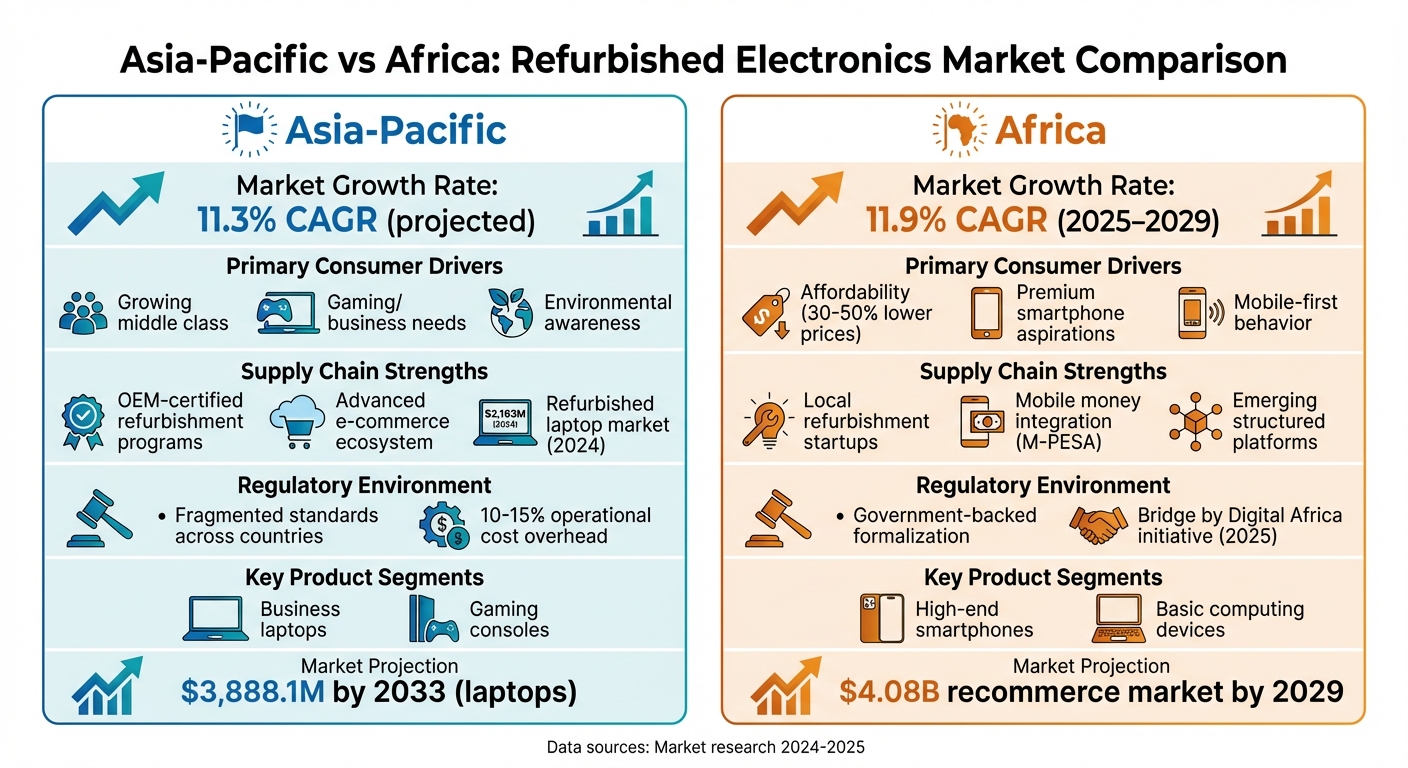
Asia-Pacific vs Africa Refurbished Electronics Market Comparison 2024-2033
This section examines the distinct strengths and challenges of the Asia-Pacific and African markets, building on earlier analyses. Asia-Pacific boasts advanced tech infrastructure and well-established e-commerce platforms, while Africa is navigating a shift from informal markets to a more organized ecosystem. These differences underline the unique market drivers and hurdles faced by each region, offering key insights into how platforms like ForthClear align with these dynamics.
Asia-Pacific's market is expected to grow at an 11.3% CAGR, slightly trailing Africa's 11.9% projected growth for 2025–2029. In Asia-Pacific, consumer demand stems from a growing middle class focused on affordable tech - like gaming hardware and business laptops - and rising environmental consciousness. Meanwhile, affordability is the primary motivator for African consumers, with refurbished devices often priced 30%–50% lower than new ones. Additionally, Africa is seeing increased interest in premium refurbished smartphones, such as iPhones, as aspirational brands gain traction.
Asia-Pacific benefits from OEM-certified refurbishment programs and a mature e-commerce ecosystem, with its refurbished laptop market projected to hit $2,163 million by 2024. Africa, on the other hand, relies on localized startups and mobile money solutions like M-PESA to address banking limitations. However, logistical challenges persist, including limited reverse logistics and a reliance on informal delivery networks.
Regulatory environments also differ significantly. Asia-Pacific faces fragmented regulations across countries, which can raise operational costs for multinational refurbishers by 10%–15%. In contrast, African governments are actively driving formalization. For example, Kenya's "Bridge by Digital Africa" initiative, launched in 2025, has supported startups in creating structured retail channels with warranties and product verification.
The table below highlights the key differences between these regions:
| Criterion | Asia-Pacific | Africa |
|---|---|---|
| Market Growth Rate | 11.3% CAGR (projected) | 11.9% CAGR (2025–2029) |
| Primary Consumer Drivers | Middle-class growth, gaming/business needs, eco-awareness | Affordability, premiumization, mobile-first behavior |
| Supply Chain Strengths | OEM-certified programs, advanced e-commerce | Local refurb startups, mobile money integration |
| Regulatory Environment | Fragmented standards; 10%–15% cost overhead | Government-backed formalization (e.g., Bridge by Digital Africa) |
| Key Product Segments | Business laptops, gaming consoles | High-end smartphones, basic computing devices |
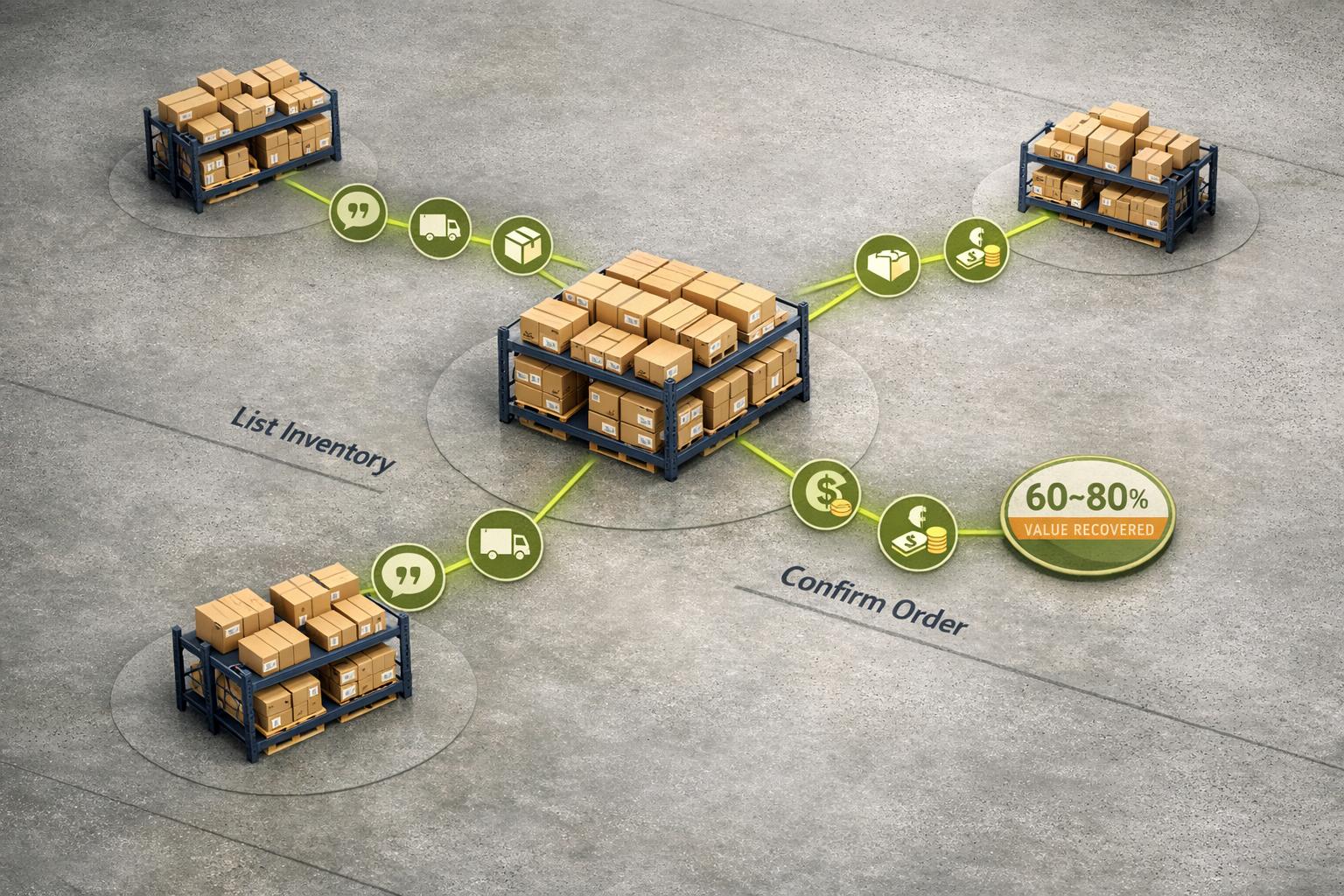
Platforms like ForthClear (https://forthclear.io) are instrumental in bridging these gaps. By offering secure escrow payments and verified supplier networks, they help tackle trust issues in both regions - whether it's inconsistent grading standards in Asia-Pacific or the evolving formal structures in Africa.
Conclusion
Asia-Pacific and Africa present unique opportunities in the refurbished electronics market, but success requires a deep understanding of each region’s specific dynamics. In Asia-Pacific, e-commerce and established refurbishment systems drive growth, with the laptop market projected to hit $3,888.1 million by 2033. Meanwhile, Africa is experiencing a surge in smartphone adoption, with a 6% year-on-year increase in H1 2025, fueled by affordability and the shift from informal to structured sales channels.
Building consumer trust is critical, and this starts with ensuring rigorous quality standards and offering warranties. These measures, paired with affordability and the rise of structured platforms, are reshaping how consumers approach refurbished products. Certified processes like 30-point inspections are already proving vital to gaining consumer confidence in both regions. For businesses, focusing on urban centers like Lagos, Nairobi, Johannesburg, and Seoul - where digital payment systems and consumer trust are strongest - can serve as a solid foundation for expansion.
Structured platforms are another key to success. Companies liquidating surplus inventory in these markets can benefit from tools like ForthClear. With features like secure escrow payments and verified supplier networks, ForthClear simplifies inventory management while addressing trust issues - a crucial factor in these emerging markets.
Lastly, strategic partnerships can amplify growth. Collaborating with local telecom providers and fintech companies - particularly those offering mobile money services like M-PESA - can significantly enhance distribution and payment accessibility. By combining structured platforms, local partnerships, and certified quality assurance, businesses can position themselves to tap into the $17.4 billion market opportunity these regions are expected to represent by 2033.
FAQs
How can buyers verify refurbished device quality and grading?
When purchasing refurbished devices, buyers can rely on standardized grading systems to assess quality. These systems evaluate both the cosmetic condition and functionality of the device. Common grades include Grade A (like-new appearance), Grade B (shows moderate signs of use), and Grade C (noticeable wear and tear).
To ensure you're getting a reliable product, stick with reputable sellers who provide clear and detailed descriptions of the device's condition. Many trustworthy suppliers also offer warranties and certifications, giving you added peace of mind. Always check if the seller adheres to transparent grading criteria and includes guarantees to confirm the device meets your expectations.
What regulations or import rules could affect selling in Asia-Pacific or Africa?
Regulations across Asia-Pacific and Africa play a big role in shaping the refurbished electronics market. Take Vietnam, for instance - its Decree 77/2023/ND-CP outlines strict rules for importing refurbished goods, including mandatory safety checks and inspections. Meanwhile, Kenya has gone a step further by proposing a ban on electronics older than 12 years.
In many countries within these regions, businesses must secure permits, meet environmental standards, or comply with specific regulations tailored to refurbished products. Understanding these local requirements is essential for any company looking to enter or expand in these markets.
How does ForthClear reduce payment and supplier trust risks in these markets?
ForthClear reduces risks associated with payments and supplier trust in emerging markets by offering a secure escrow payment system and a verified supplier network. These tools help make transactions more transparent and dependable, building confidence for both buyers and sellers.