When deciding how to ship overstock inventory, the choice between freight and parcel shipping depends on weight, size, and destination. Here’s the key takeaway:
- Freight shipping is ideal for bulk items over 150 lbs, offering cost-effective options like Less-Than-Truckload (LTL) for smaller pallets or Full Truckload (FTL) for large volumes.
- Parcel shipping works best for smaller, individual packages under 150 lbs, with faster delivery times and detailed tracking.
Quick Overview:
- Freight: Suitable for palletized goods, heavier shipments, and bulk inventory. Lower touchpoints reduce damage risk but delivery is slower.
- Parcel: Designed for smaller, direct-to-consumer shipments with quicker delivery but higher risk of damage due to automated handling.
Key Costs:
- Freight: $1–$3/lb for LTL; $3,000–$5,000 per full truckload.
- Parcel: Dimensional weight pricing and surcharges make it less cost-effective for heavier or bulky items.
Delivery Times:
- Parcel: 1–5 days.
- Freight: LTL takes 3–10+ days; FTL delivers in 1–2 days.
Hidden Fees:
- Parcel: Oversize penalties, delivery surcharges.
- Freight: Liftgate services, residential delivery fees.
Efficient shipping is essential for reducing costs and freeing up warehouse space. Platforms like ForthClear simplify overstock liquidation by connecting sellers with bulk buyers and managing logistics. Always measure and weigh shipments accurately to avoid unexpected fees.
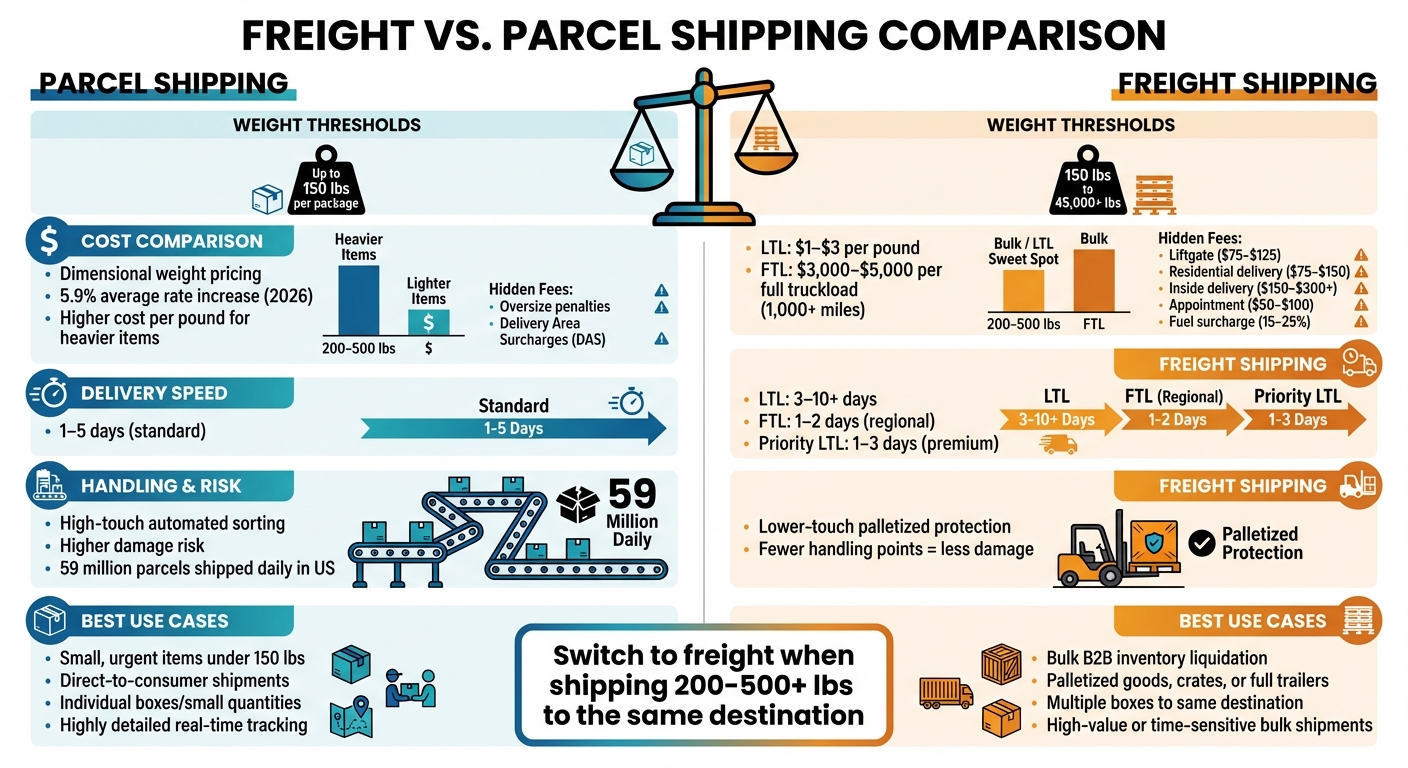
Freight vs Parcel Shipping Comparison: Costs, Speed, and Best Use Cases
What's the Difference Between Parcel, LTL Freight, and FTL Freight?
sbb-itb-bc600a0
Cost Differences Between Freight and Parcel Shipping
Understanding how costs vary between freight and parcel shipping is essential for managing surplus inventory effectively.
Cost Per Pound and Volume Thresholds
Shipping costs take a sharp turn at the 200-pound mark. Below this threshold, carriers like UPS and FedEx base their charges on dimensional weight and shipping zones. By early 2026, these carriers introduced average rate hikes of about 5.9%, making parcel shipping less cost-effective for heavier packages.
For shipments weighing between 200 and 500 pounds heading to a single destination, LTL (Less-Than-Truckload) freight becomes the more affordable option. In 2026, LTL rates average between $1 and $3 per pound, whereas parcel shipping costs per pound increase significantly for heavier items. For full truckload shipments traveling over 1,000 miles, the cost typically falls between $3,000 and $5,000 per load for a 53-foot trailer that can carry up to 45,000 pounds.
The concept of density plays a huge role in determining shipping costs. Freight carriers offer better rates for high-density shipments due to lower freight classes, while parcel carriers penalize low-density, bulky items with dimensional weight pricing. This can make shipping lightweight but large items surprisingly expensive.
On top of base rates, additional fees can significantly impact overall shipping expenses.
Hidden Costs and Surcharges
Parcel shipping often comes with extra fees, including handling charges, oversize penalties, and Delivery Area Surcharges (DAS) for remote ZIP codes. These surcharges can add up quickly, especially when shipping overstock to residential or rural areas.
Freight shipping has its own set of accessorial fees. Residential delivery typically costs an extra $75 to $150 per shipment, while liftgate service adds $75 to $125. Inside delivery can range from $150 to $300 or more, and scheduling a delivery appointment incurs another $50 to $100. Additionally, fuel surcharges often account for 15% to 25% of the base rate.
Errors in shipment data can lead to unexpected costs. If the weight or dimensions of your shipment are incorrect, carriers may reclassify it and bill you retroactively. These reweigh and reclass fees usually range from $75 to $100 per instance. Mistakes in the Bill of Lading can inflate costs by 20–50%. Since the National Motor Freight Traffic Association (NMFTA) shifted to density-based classifications on July 19, 2025, accurate measurements - including all packaging - are more critical than ever.
Delivery Speed and Reliability: Freight vs. Parcel
When it comes to overstock liquidation, delivering inventory on time is crucial. Parcel and freight shipping operate on distinct schedules, and understanding how they differ can help you set realistic expectations for buyers.
Parcel Shipping: Speed and Flexibility
Parcel carriers typically deliver within 1 to 5 days for standard services, with faster options like overnight or 2-day delivery available for urgent shipments. Every day, about 59 million parcels are shipped in the United States, supported by highly automated networks. These systems are designed to handle additional packages efficiently, making parcel shipping a reliable choice for smaller shipments under 150 pounds.
However, the reliance on automated sorting hubs and conveyor systems can increase the risk of damage, especially for fragile items. Still, for smaller, time-sensitive shipments, parcel shipping offers predictable timelines and guaranteed delivery windows, making it a go-to option for rapid and reliable service.
For larger shipments, however, freight shipping is often the better choice.
Freight Shipping: Consolidation and Direct Routes
Speed plays a key role in liquidating surplus inventory, and freight shipping offers two main options: Less-than-Truckload (LTL) and Full Truckload (FTL). Each has its own delivery timelines and processes.
LTL shipments use a hub-and-spoke system, where pallets are consolidated with other shipments at terminals. This process can extend delivery times. As the FreightCenter Team explains:
Freight shipping is slower, with delivery ranging from several days to weeks.
LTL shipments typically take 2–3 days longer than FTL due to the extra time spent at consolidation terminals. Josh Dunham from Reveel adds:
A single extra pallet in freight can delay shipments for multiple days at a time.
On the other hand, FTL shipping is ideal for large volumes of inventory. Brad McBride, CEO of Zero Down Supply Chain Solutions, notes:
FTL is also ideal for high-value or time-sensitive shipments, as the truck goes directly to the destination with no intermediate stops, reducing potential delivery delays.
FTL shipments can reach their destination in 1 to 2 days regionally. With fewer handling points, FTL also reduces the risk of damage. While LTL services are slower, premium options like Priority LTL can deliver in 1 to 3 business days, comparable to parcel speeds - though these services come at a higher cost.
Choosing between parcel and freight shipping often comes down to weighing speed, cost, and the nature of your inventory.
Here’s a quick comparison of delivery times and the best uses for each method:
| Shipping Method | Typical Delivery Time | Best for Overstock |
|---|---|---|
| Parcel | 1–5 days (standard) | Small, urgent items under 150 lbs |
| LTL Freight | 3–10+ days | Mid-sized pallets, non-urgent liquidation |
| FTL Freight | 1–2 days | Large volumes, time-sensitive bulk sales |
Which Shipping Method Works Best for Different Overstock Volumes
Choosing the right shipping method depends on your overstock's weight, size, and destination. For items over 150 lbs, freight shipping is generally required. But the decision gets trickier when shipping multiple boxes to the same buyer. Here's how to decide between parcel and freight shipping to balance cost and reliability.
When to Choose Parcel Shipping
Parcel shipping is ideal for packages weighing up to 150 lbs that need quick delivery. If you're selling smaller quantities or individual items directly to customers, parcel carriers can deliver within 1 to 5 days and provide detailed tracking along the way.
However, parcel shipping comes with strict size and weight limits. While items between 70 and 150 lbs can still ship as parcels, it's crucial to compare carrier quotes. Extra fees, like "Over-Maximum" or "Large Package" charges, can make parcel shipping more expensive than freight options.
When to Choose Freight Shipping
Freight shipping works best for bulk inventory, palletized goods, or high-value items. If you're sending multiple boxes to one location, consolidating them onto a pallet becomes more cost-effective when the total weight exceeds 200 to 500 lbs. Brad McBride, CEO of Zero Down Supply Chain Solutions, explains:
LTL shipments often become cheaper than sending multiple shipments via individual small parcel shipments once your total weight exceeds 200-500 lbs going to the same destination.
Freight shipping also reduces handling points, lowering the risk of damage compared to parcel shipments. For bulk B2B transactions - like liquidating inventory through platforms such as ForthClear - freight is typically the go-to option. Less-Than-Truckload (LTL) shipping handles loads between 150 and 15,000 pounds, while Full Truckload (FTL) is reserved for shipments over 15,000 pounds.
The table below highlights the key differences between parcel and freight shipping to help you choose the best option.
Freight vs. Parcel Comparison Table
| Feature | Parcel Shipping | Freight Shipping (LTL/FTL) |
|---|---|---|
| Weight Limit | Up to 150 lbs per package | 150 lbs to 45,000+ lbs |
| Volume Capacity | Individual boxes/small quantities | Pallets, crates, or full trailers |
| Delivery Speed | Fast (1–5 days) | Slower (days to weeks) |
| Handling Risk | High-touch, automated sorting | Lower-touch, palletized protection |
| Tracking | Highly detailed, real-time | Varies; often limited to hub scans |
| Best Use Case | Direct-to-consumer overstock | Bulk B2B inventory liquidation |
| Special Services | Standard doorstep delivery | Liftgate or inside delivery (extra fee applies) |
When dealing with overstock, always measure and weigh your inventory after palletizing and shrink-wrapping. These final dimensions impact density calculations, which can lower your freight class and save you money. If you're shipping to a location without a loading dock, don't forget to account for liftgate service fees - these are common for residential or non-commercial freight deliveries.
How to Choose the Right Shipping Method for Your Overstock
Consider Volume and Weight
Start by measuring and weighing your overstock using an approved scale. It's essential to know the size and weight of your packages, as these factors directly influence which shipping method works best. For example, items over 150 lbs should be shipped via freight.
For shipments between 70 and 150 lbs, you have a choice between parcel and Less-Than-Truckload (LTL) freight. While parcel shipping might be quicker, carriers often add surcharges for heavier items, making freight a potentially more cost-effective option - especially for bulky goods. To make the best decision, get quotes for both methods and weigh the trade-offs between speed and cost.
If you're shipping multiple boxes to the same buyer, calculate the total weight and think about consolidating them onto a single pallet. Once the combined weight exceeds 200–500 lbs, palletizing often becomes more economical than shipping individual boxes. Plus, fewer handling checkpoints mean less risk of damage, which is especially important for fragile items. Before booking, photograph and confirm your pallet's dimensions to avoid unexpected reclassification fees.
With accurate measurements and a clear understanding of costs, you can use specialized platforms to streamline and optimize your shipping process.
Use Platforms for Overstock Management
Efficiently liquidating overstock involves more than just shipping - it requires smooth coordination with buyers, accurate inventory checks, and proper documentation like the Bill of Lading. Platforms such as ForthClear simplify this process by connecting you with verified bulk buyers who are familiar with freight logistics. These platforms also let you negotiate shipping terms upfront, ensuring additional services like liftgate or residential delivery fees are addressed before finalizing a sale.
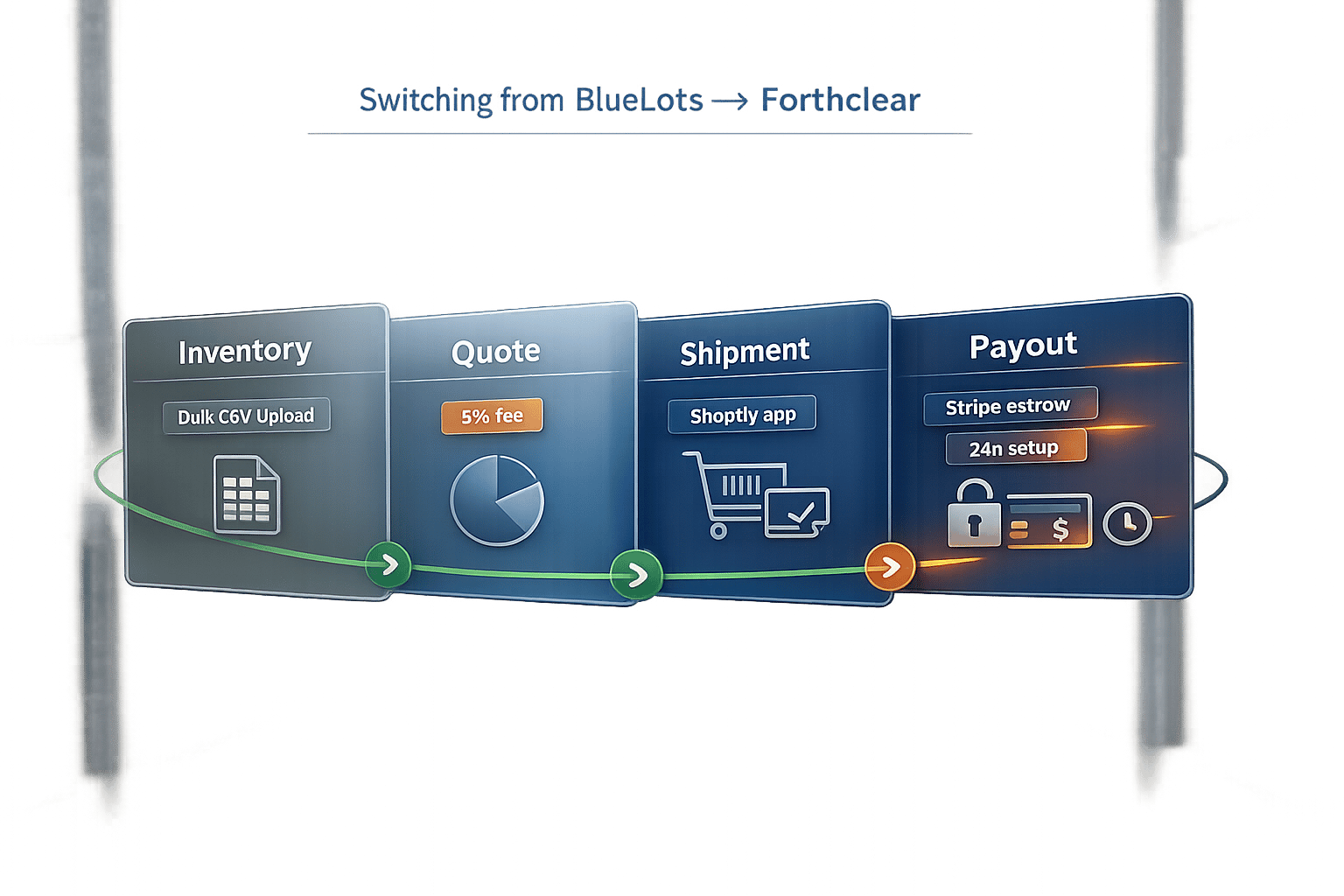
ForthClear offers features like Shopify integration, which flags items unsold for 60 days or more, making it easy to identify overstock ready for liquidation. When you list these items, buyers can see precise weights and dimensions, helping them provide accurate freight quotes. To minimize disputes, ForthClear uses a secure Stripe escrow payment system, ensuring funds are only released after delivery confirmation. This added layer of security reduces risks tied to damaged or misrepresented shipments in bulk B2B transactions.
Conclusion
For shipments over 150 lbs, freight is often the better option, while parcel shipping works best for lighter, direct-to-consumer deliveries. Freight becomes especially practical when consolidating multiple boxes for the same buyer, particularly when the combined weight exceeds 200–500 lbs.
With carrier rate increases averaging around 5.9%, making accurate cost comparisons is more important than ever. Matching your shipping method to the size and weight of your inventory can help you save money and improve efficiency.
Platforms like ForthClear simplify the process of shipping surplus inventory. By connecting you with verified bulk buyers and securing payments through Stripe escrow, ForthClear ensures a smooth transaction. Its Shopify integration flags items unsold for over 60 days, helping you quickly identify surplus stock. Listing items with exact weights and dimensions allows buyers to provide precise freight quotes upfront, avoiding unexpected costs like liftgate fees or residential delivery charges. From listing to payment, ForthClear manages the entire process, making your shipping decisions a key part of effective inventory management.
FAQs
How do I know when to palletize instead of shipping boxes?
When dealing with shipments that are heavy, oversized, or consist of multiple items headed to the same location, palletizing is a smart choice. This approach is especially useful for shipments weighing over 150 pounds or with dimensions exceeding 108 inches in length, or 165 inches when combining length and girth. Palletizing not only provides improved protection but also simplifies handling and can help lower costs for transporting large or heavy loads.
How can I avoid surprise fees on parcel or freight shipments?
To steer clear of surprise fees, make sure to provide accurate shipment details like weight, dimensions, and any special handling requirements. For freight shipments, always request written fixed-cost quotes to lock in pricing and avoid unexpected charges. When it comes to parcels, using the right-sized packaging is key - oversized or non-standard dimensions can lead to surcharges. Clear communication with carriers and double-checking all shipment requirements ahead of time are crucial steps to keep additional fees at bay.
What shipment details do I need for an accurate freight quote?
To get a freight quote that’s accurate, you’ll need to share some key details. Start with the weight and dimensions of your shipment. Include the origin and destination locations, as these determine the route and costs. Lastly, specify the type of cargo you're shipping. These details are crucial for getting precise pricing and service options.