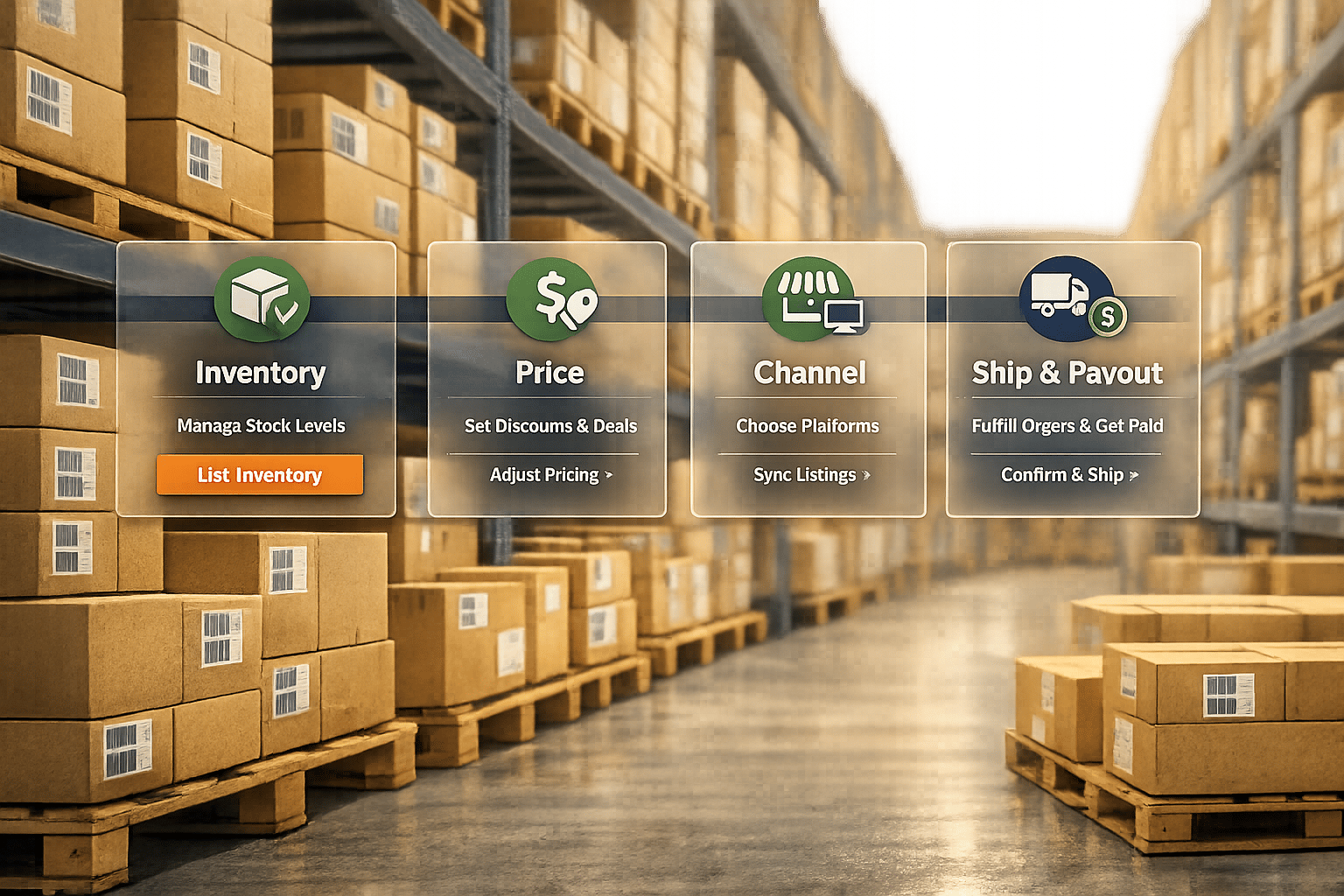
Pricing disputes with resellers can hurt margins, damage relationships, and confuse customers. Whether it’s due to MAP violations, unapproved discounts, or inventory issues, addressing these conflicts quickly and effectively is key to protecting your brand and maintaining reseller trust.
Here’s a quick breakdown of how to tackle these issues:
- Identify the problem: Review contracts, pinpoint violations (like MAP breaches or pricing inconsistencies), and quantify the financial impact.
- Act fast: Delayed responses can escalate conflicts and damage trust. Swiftly address issues to prevent broader disruptions.
- Negotiate solutions: Use data-backed evidence to set clear goals, offer concessions (like rebates or promotions), and reach agreements that benefit both parties.
- Prevent future disputes: Strengthen pricing policies, monitor compliance, and provide clear guidelines for handling surplus inventory.
EFFECTIVE MAP & OTHER PRICING POLICIES: EVERYTHING LEGAL COUNSEL AND COMPANIES NEED TO KNOW
Identifying the Root Cause of Pricing Disputes
Finding the root cause of a pricing dispute is key to resolving it effectively. This process involves digging into contracts, pinpointing specific triggers, and assessing the financial impact. By turning vague complaints into clear, actionable issues, you can protect your margins and strengthen reseller relationships while preparing for strategic negotiations.
Review Reseller Agreements and Pricing Policies
Start by carefully examining your reseller contracts and pricing policies. Pay close attention to clauses related to pricing and discounts, such as base prices, discount tiers, volume rebates, and adjustment mechanisms. These details will help you determine if the disputed price adheres to the agreement or violates its terms.
Don’t overlook guidelines like MAP (Minimum Advertised Price) or MSRP policies, which dictate the advertised price rather than the final transaction price. Misunderstanding this difference often leads to disputes. Additionally, review terms related to territory, channel, and exclusivity. For instance, a reseller authorized to sell only in physical stores within a specific region might breach the agreement by listing products online, even if the pricing appears acceptable.
Check conflict-resolution clauses as well. Many agreements outline steps like providing written notice, allowing a cure period, or scheduling discussions before escalating the issue. Lastly, ensure pricing updates were communicated clearly through email logs, portal notifications, or acknowledgment receipts. Miscommunication can sometimes look like a violation when it’s not.
Pinpoint Specific Dispute Triggers
Once the contract review is complete, identify the behaviors causing the conflict. Common triggers include:
- MAP violations: Resellers advertising prices below the minimum on platforms like Amazon or their own sites. Document these violations with screenshots and timestamps.
- Gray-market or unauthorized sales: Products showing up in unauthorized channels or regions at unusually low prices. Analyzing shipment records and transaction data can help identify these diversions.
- Rising costs squeezing margins: When input costs like labor or materials increase but contract pricing doesn’t adjust, resellers may discount more aggressively, eroding margins.
- Channel pricing inconsistencies: Resellers may object if they find other partners - or even your direct sales channels - offering lower prices, often highlighting inconsistencies in your internal policies.
- Rebate or promotion disputes: Misalignment in how volume rebates, incentives, or marketing funds are calculated can create friction. Clear documentation and consistent program rules are critical to avoid these issues.
It’s important to differentiate between accidental errors, like data feed mistakes, and deliberate violations. A one-time pricing error that’s quickly fixed points to a process issue, while repeated problems across multiple products or channels suggest intentional non-compliance, requiring stricter measures.
Once the triggers are clear, quantify their impact to shape your negotiation approach.
Calculate the Financial and Business Impact
Understanding the financial impact of pricing disputes helps you prioritize your response. Start by calculating the price variance: subtract the agreed price from the actual charged price, then multiply by the number of units sold. For example, if 2,000 units were sold at $5 below the agreed price, that’s a $10,000 revenue shortfall.
Next, evaluate gross margin impact by comparing planned margins to actual margins after factoring in discounts, rebates, and rising input costs. If costs have increased without corresponding price adjustments, your margins may be taking a hit.
Consider the ripple effects across your distribution network. A price drop by one reseller might force others to lower their prices to stay competitive, potentially reducing margins across the board. Analyzing price trends over time can reveal whether a single discounting event has triggered a larger pattern.
Inventory performance data can also provide insights. A sudden spike in sales at lower prices might indicate channel conflict or even harm to your brand’s value. On the other hand, clearance pricing on slow-moving stock could point to forecasting or allocation issues.
Finally, assess the risks to your reseller relationships and potential legal costs. Losing a major partner can be expensive, as can legal or mediation fees if the dispute escalates. Summarize your findings in a table that links violations to specific resellers and SKUs, turning subjective complaints into solid evidence.
This thorough analysis will give you the tools to craft a negotiation strategy that addresses the root of the problem effectively.
Building a Negotiation Strategy
After identifying the root cause and calculating the financial impact of a pricing dispute, the next step is to craft a clear negotiation strategy. A thoughtful plan - complete with defined goals, supporting evidence, and a coordinated team - can help you maintain margins while preserving key relationships. The foundation of your strategy should be precise, data-backed decisions.
Define Your Goals and Limits
Start by setting clear, measurable objectives. For instance, you might aim for a 30-day timeline for full MAP compliance or ensure a minimum gross margin of 25%. Use the triggers you’ve identified to establish firm targets, while also outlining areas where you’re willing to offer flexibility.
Identify your non-negotiables, such as strict MAP adherence or prohibiting unauthorized discounts. At the same time, define concessions you’re open to, like offering volume-based rebates or using services like ForthClear to offload surplus inventory. For example, you could say: "We can’t lower the MAP on Product A, but we can offer a 10% discount on 500 units of surplus Product B through ForthClear. You can bundle or sell these at a competitive price to maintain your margins."
It’s also essential to establish your BATNA (Best Alternative to a Negotiated Agreement). If the reseller represents 15% of your sales and you can shift those sales to other partners, your BATNA is strong. However, if losing that reseller would create a significant revenue gap, you may need to adjust your approach.
"Brands using well-designed channel pricing policies saw channel conflict–related complaints decrease by 20–25% after policy clarification and consistent enforcement", according to a 2019 survey cited by Harvard Business Review.
Collect Supporting Data and Documentation
Next, gather the evidence needed to back up your terms. Start with the signed agreement and any addenda, highlighting clauses related to pricing, MAP, territories, and dispute resolution. Compile historical pricing and sales data from the past 6–12 months, including list prices, transaction prices, discount levels, units sold, revenue, and margins for each reseller.
Document violations with timestamped screenshots from the reseller’s website or marketplaces like Amazon or eBay, ensuring U.S. dollar amounts are clearly visible. Include prior communications about pricing issues, such as emails, policy updates, or warnings. Additionally, collect competitive pricing data to show how the reseller’s prices compare to other partners and your direct channels.
Organize this information into a clear, concise package. This might include a one-page summary of the dispute, a timeline of key events, a table comparing the reseller’s pricing to MAP and other partners, and relevant excerpts from the contract. A well-prepared package ensures negotiations stay focused on the facts.
Industry reports suggest that 75–80% of MAP violations on major marketplaces stem from unidentified or gray-market sellers rather than authorized partners.
Verify whether the violations are caused by your reseller or unauthorized sellers using their account or inventory. This distinction is critical for determining how to proceed.
Select Communication Methods and Team Roles
Begin the process with a formal written notice that references the relevant contract clauses and proposes a meeting. For example:
"We’ve observed your advertised price of $449 for Product XYZ-1000, which is below our MAP of $479 as outlined in Section 3.2 of our reseller agreement dated 01/15/2024. We’d like to schedule a call on 12/15/2025 at 2:00 PM EST to discuss a resolution."
This approach establishes a professional tone and creates a paper trail.
For complex disputes or key accounts, consider scheduling a video call or in-person meeting. Provide a clear agenda, time limits for discussion, and specific decision points. Assign roles within your team to ensure a coordinated effort: the account lead facilitates the discussion, sales advises on volume and margin considerations, legal reviews contract enforceability, and finance assesses the financial impact of proposed concessions.
All communication must comply with U.S. antitrust laws. Your pricing policy should be unilateral and consistently applied across all resellers. Avoid statements like, "We all need to keep prices at this level." Instead, say, "Our unilateral MAP policy requires advertised prices to be at or above $479. We enforce this consistently with all partners."
If the resolution includes selling surplus inventory at discounted rates, ForthClear’s built-in messaging system can streamline the process. It allows you to negotiate bulk pricing privately, finalize deals quickly, and protect core product pricing - all in real time.
sbb-itb-bc600a0
Negotiating Pricing Disputes with Resellers
Once you’ve prepared your strategy and gathered supporting evidence, it’s time to engage with your reseller. A structured approach can help keep the conversation focused on facts, safeguarding your pricing strategy while addressing the reseller’s concerns.
Begin with Common Objectives
Start by finding shared goals. Both you and the reseller likely want healthy margins, a strong brand image, and fair treatment across all channels. Framing the conversation this way makes it less confrontational and more collaborative.
Use specific examples to highlight the broader consequences of underpricing. For instance, explain how aggressive discounts in one marketplace can lead to complaints from other partners, higher return rates, and a reluctance from dealers to stock your products. This approach shifts the discussion toward solving a shared problem rather than engaging in a standoff.
Together, define what success looks like. This could include maintaining a minimum advertised price (MAP) across all platforms, ensuring all partners earn viable margins, avoiding customer confusion, and preserving long-term relationships. Documenting these goals early helps keep the conversation focused on mutual benefits.
Harvard Business Review notes that unchecked discounting by online resellers can reduce a brand’s margins by 20–30% and harm perceived quality when pricing policies aren’t enforced effectively.
It’s also worth pointing out the difference between short-term sales boosts from underpricing and the long-term damage it can cause. A constant cycle of discounts can hurt your brand’s perceived value, create conflicts among partners, and train customers to wait for sales instead of buying at regular prices.
Once you’ve established common ground, you can move on to practical negotiation techniques.
Use Practical Negotiation Techniques
Successful negotiations require preparation, structure, and flexibility. Start by setting a clear agenda: review the facts, discuss the impacts, explore each other’s interests, and agree on actionable steps.
One effective strategy is value trading. Offer something beneficial - like better payment terms, extra marketing support, or co-funded promotions - if the reseller agrees to follow MAP guidelines. Time-limited discounts or bundle deals can also help the reseller compete on value without undermining your pricing strategy.
When making concessions, tie them to measurable commitments. For example, you could say, “We’ll increase your quarterly marketing funds by X% if you align all advertised prices with MAP across your listings within the next 30 days.” This shows flexibility while protecting your pricing policies.
Conditional agreements can also be helpful. For instance: “If you bring all advertised prices back to MAP within two weeks, we’ll offer an additional rebate on future units sold.” Setting review checkpoints ensures accountability on both sides.
Always refer to your written MAP or pricing policy as the standard, rather than framing it as a personal demand. For example, instead of saying, “We need to keep prices at this level,” clarify, “Our policy requires advertised prices to meet MAP standards, and we enforce this consistently across all partners.” This approach ensures fairness and compliance with U.S. antitrust laws while avoiding language that could suggest collusion.
If the reseller’s price cuts stem from aging inventory, explore ways to clear that stock without damaging your overall pricing. You might, for instance, offer a one-time discount on the older batch, as long as the reseller agrees to raise current-line prices to MAP and commits to routing future surplus inventory through a designated channel. Platforms like ForthClear allow you to privately negotiate bulk pricing and offload surplus stock without creating public price erosion, protecting both your brand and the reseller’s interests.
Make sure to document all agreements immediately to create a clear record of what’s been decided.
If negotiations still hit a wall, it may be time to escalate the issue.
Resolve Deadlocks with Formal Dispute Resolution
When discussions stall, follow your contract’s escalation process. Many agreements specify that unresolved issues should move to an executive-to-executive meeting, where senior leaders can make decisions and approve concessions. This step builds on the structured negotiation process, ensuring disputes are handled systematically.
If executive meetings don’t resolve the issue, mediation may be the next step. Mediation offers a confidential, non-binding environment where a neutral third party helps both sides explore alternatives and find a solution. This approach can preserve the relationship while addressing the conflict.
If mediation fails or isn’t included in the contract, arbitration is another option. Arbitration provides a binding resolution that’s typically faster than going to court. A neutral expert in commercial or distribution law reviews the case and makes a final decision. To avoid future conflicts, consider adding clear dispute-resolution clauses to reseller agreements. These should outline notice requirements, cure periods, and an escalation process.
Throughout the process, keep discussions professional and focused on the facts. The goal is to resolve the issue without damaging the relationship or risking legal complications - even if parting ways becomes the only option.
Creating Policies to Prevent Future Pricing Disputes
Strengthening your agreements and processes is key to avoiding recurring pricing conflicts. With clear policies, consistent enforcement, and transparent systems for handling surplus inventory, many pricing issues can be resolved before they even arise. Here's how to refine contracts, ensure compliance, and leverage ForthClear to manage surplus inventory effectively.
Revise Pricing Policies and Contract Language
Well-defined pricing policies are the foundation of effective dispute prevention. Your reseller contracts should clearly outline pricing structures, including base wholesale prices, allowable discounts, and volume-based pricing tiers. If you enforce a Minimum Advertised Price (MAP) policy, specify exactly where it applies - whether that’s websites, platforms like Amazon and eBay, social media ads, or print materials. Avoid vague terms and instead use precise dollar amounts or percentages.
For U.S. resellers, it’s wise to consult antitrust counsel when drafting MAP or similar pricing policies. A unilateral pricing policy is often the safest route. This allows you to set terms independently and decide who to supply, without requiring resellers to agree on resale prices. Make it clear in your policy that resellers are free to set their own prices but may lose supply or benefits if they fail to comply. This approach minimizes antitrust risks associated with resale price agreements.
For example, you could permit a 15% discount during a back-to-school promotion but require written approval for deeper discounts. Include detailed rules for bundles, coupons, rebates, and clearance sales so resellers fully understand what’s allowed.
Contracts should also address dispute resolution. Implement a tiered process that starts with direct negotiation between representatives, typically allowing 10–15 business days for resolution. If unresolved, escalate to senior management. Include mediation or arbitration clauses to avoid litigation and specify which documents (like invoices, screenshots, or marketplace listings) are required to evaluate disputes. Clearly state the governing law and venue in the U.S. to prevent jurisdictional confusion.
Price increase requests should also be explicitly addressed. Define objective criteria for evaluating adjustments, such as material costs or market conditions. Require resellers to submit requests in writing with supporting evidence (e.g., supplier invoices or market analysis) at least 60 days in advance. Make it clear that conditioning performance on an unapproved price increase is a breach of contract.
Lastly, clarify ownership clauses to establish who owns customer relationships and how pricing decisions are made. Include defined terms for ending partnerships, detailing what happens to inventory and pricing obligations in the event of dissolution.
Set Up Compliance Monitoring and Enforcement
Even the most thorough policies are ineffective without proper monitoring. Use daily price-monitoring tools to log violations with URLs, timestamps, and screenshots. A centralized database ensures consistent enforcement across your reseller network and provides evidence when disputes arise.
Conduct quarterly or semi-annual audits to verify compliance with pricing agreements. Compare contract price lists with actual invoices and online ads. Check for unauthorized sales channels and confirm product authenticity. Maintain a compliance dashboard to track metrics like average selling prices, discount frequency, and adherence to channel guidelines. This data will be invaluable for identifying patterns and addressing violations.
When violations occur, enforce policies swiftly and consistently. Establish a step-by-step enforcement process in writing and apply it uniformly. For a first offense, send a written notice referencing the specific contract clause violated and provide a cure period (typically 5–10 business days). A second violation might result in temporary loss of benefits like co-op funds or marketing support. Repeated or severe violations could lead to suspension or termination of authorized status. Consistent enforcement not only upholds your policies but also minimizes claims of favoritism or discrimination.
Document every enforcement action for future reference. For instance, if you warn one reseller for advertising 10% below MAP, ensure the same action is taken for any other reseller violating the same rule. Inconsistent enforcement undermines your credibility and could lead to legal challenges.
Educate your resellers on the rationale behind your policies. Provide a reseller policy manual that explains pricing rules, promotional windows, and how to request exceptions for special bids or seasonal promotions. Host webinars or Q&A sessions - scheduled in U.S. time zones - to walk through policies and address concerns. Sharing data on how stable pricing protects margins and brand value can help resellers see these policies as beneficial rather than restrictive. When resellers understand the value of compliance, they’re more likely to adhere to the rules.
Use ForthClear for Transparent Surplus Inventory Sales
Surplus inventory often leads to pricing conflicts when resellers resort to deep discounting, undercutting your pricing strategy and frustrating other partners. ForthClear offers a structured solution to prevent these issues.
As a B2B marketplace for surplus stock, ForthClear provides a transparent channel for selling excess inventory at preset wholesale prices. It features secure escrow payments through Stripe Connect, verified suppliers, and bulk pricing systems. Funds are held until the buyer confirms delivery, reducing disputes over payment or delivery.
By routing surplus inventory through ForthClear, you can set pre-approved wholesale price ranges that align with your pricing strategy. For example, if your standard wholesale price is $50 and MAP is $100, you might allow surplus stock to be sold at $40–$45 wholesale, with the agreement that buyers won’t resell below MAP on public channels. This approach allows resellers to move aging inventory profitably without disrupting your pricing structure.
ForthClear’s real-time communication and order tracking features ensure transparency. Detailed inventory listings - complete with SKUs, quantities, prices, and optional details like purchase dates - provide clarity for all parties. If disputes arise, you’ll have complete documentation of what was sold, to whom, and at what price.
The platform charges sellers a 5% fee plus Stripe’s 2.9% + $0.30 per transaction, while buyers can browse for free. This cost structure makes it an efficient tool for manufacturers and resellers to manage surplus inventory.
To formalize this process, update reseller agreements to include specific clauses about surplus inventory. For instance: "All surplus, end-of-life, or overstock inventory must be sold through the designated secondary channel at pre-approved wholesale prices. Resellers may not advertise or sell surplus inventory below MAP on public marketplaces without written authorization." This removes ambiguity and provides a clear enforcement mechanism.
ForthClear also simplifies compliance monitoring. Since all transactions are documented, you can easily audit whether resellers are following the approved process or attempting unauthorized discounting. This visibility reduces disputes and ensures consistency.
"ForthClear has revolutionized how we handle excess inventory. The secure payment system and quality suppliers have made our sourcing process incredibly efficient." - Gordon Belch, Co-founder
"Easy to get started and offload some of our products that were nearing expiry date. Very helpful that ForthClear helps to find buyers in the process." - Hylke Reitsma, Co-founder
When resellers have a legitimate, profitable outlet for surplus inventory, they’re far less likely to engage in unauthorized discounting that leads to pricing disputes. This proactive strategy protects your brand, maintains pricing integrity, and strengthens reseller relationships across the board.
Conclusion
Summary of Core Practices
Addressing pricing disputes requires a systematic approach: diagnose, negotiate, and prevent. Start by reviewing your reseller agreements, pricing policies, and transaction records to identify issues like unauthorized discounting, violations of Minimum Advertised Price (MAP), or margin erosion. Pinpoint the impact of these issues on margins, channel conflicts, and operational efficiency. With that understanding, develop a negotiation strategy that clearly defines your goals, walk-away points, and supporting evidence. Assign specific roles to team members across legal, sales, and finance to ensure a unified approach.
During negotiations, prioritize collaboration by focusing on shared objectives such as increasing revenue, protecting brand value, and maintaining fair margins. Use active listening to better understand your reseller's challenges. Explore creative solutions like updated discount tiers, temporary promotional pricing, or volume rebates that balance your need to protect margins with your reseller's competitive needs. If discussions reach an impasse, escalate to structured methods like mediation or arbitration. To prevent future disputes, refine pricing policies and contract language by clearly outlining discount structures, territories, and dispute resolution processes. Regular compliance monitoring is essential for maintaining alignment. These steps not only resolve immediate conflicts but also create a solid foundation for long-term reseller partnerships.
Effective communication is another cornerstone of dispute resolution. Regular check-ins, such as quarterly business reviews, provide a platform to address pricing pressures and upcoming promotions before they escalate. Follow up key discussions with straightforward written summaries to confirm agreed-upon terms and pricing. Additionally, training account managers in active listening and empathetic communication ensures that resellers feel understood, even during tough conversations. Transparent explanations for price changes - whether driven by cost increases, strategic adjustments, or repositioning - help minimize misunderstandings and reduce the risk of future conflicts.
Long-Term Benefits of Effective Dispute Management
Implementing these practices delivers benefits that extend well beyond resolving disputes. Clear pricing and MAP policies help reduce margin erosion and create predictable pricing structures, which improve revenue forecasting and inventory planning. Structured approaches to dispute resolution save time and resources, freeing up energy for growth initiatives.
The advantages aren’t just financial. Handling disputes fairly and transparently builds trust and loyalty with resellers. When partners feel confident in your pricing strategy, they’re more likely to invest in inventory, training, and marketing efforts - ultimately enhancing product visibility and boosting sales. Trusted relationships with resellers also offer an added bonus: early insights into market trends and competitor activity, which allow you to respond more quickly and effectively to shifting dynamics.
Proactive dispute management also supports smarter decisions around inventory and channel strategies. When pricing rules are clear and consistently applied, tools like ForthClear can be seamlessly integrated to manage surplus inventory without undermining pricing integrity. This approach helps stabilize channel performance, minimizes write-offs, and promotes sustainable inventory practices.
The next steps are straightforward: review your reseller agreements and pricing strategies, identify the most pressing or costly disputes, and apply the practices outlined here. Taking these proactive measures will not only resolve current challenges but also protect your margins and strengthen your reseller partnerships in an increasingly competitive market.
FAQs
How can I create reseller agreements that minimize pricing disputes?
To reduce the chances of pricing disputes with resellers, start by crafting clear, detailed agreements from the beginning. These agreements should spell out specific pricing policies, such as minimum advertised pricing (MAP), volume discounts, and penalties for any violations. The goal is to make these guidelines straightforward and easy to follow.
Consistent communication is key. Plan regular check-ins with resellers to address concerns, clarify expectations, and ensure everyone stays on the same page. You might also want to leverage tools that monitor pricing and compliance in real-time. These can help you catch and address potential problems early, before they turn into bigger issues.
If you're dealing with surplus inventory, platforms like ForthClear can simplify the process. They offer features like secure escrow payments, verified suppliers, and real-time communication, making transactions smoother and reducing the risk of disputes.
How can I identify and document pricing violations by resellers effectively?
To spot and record pricing violations by resellers, begin by keeping an eye on their advertised prices across various sales channels - this includes websites, social media platforms, and physical stores. You can use monitoring tools or conduct manual checks to ensure they’re following your pricing policies.
When you find a violation, document it thoroughly. Save screenshots, note the dates, and include any relevant communications. These records will make it easier to address the issue during discussions or negotiations. Regular monitoring and detailed documentation are essential for resolving disputes and ensuring pricing remains consistent and fair.
How can I enforce pricing policies with resellers without damaging our business relationship?
Maintaining strong connections with resellers while upholding pricing policies can be a delicate balancing act. Start by ensuring your pricing policies are clearly communicated from the outset. Make sure they’re well-documented and easy to access - this level of transparency helps resellers understand your expectations and can prevent unnecessary disputes.
When disagreements do occur, approach the situation with a problem-solving attitude. Take the time to listen to the reseller’s concerns and work together to find solutions that work for both sides. For example, you could offer incentives for following the pricing guidelines or consider adjusting certain terms if it makes sense. Whatever the case, consistency is critical - apply your policies evenly across all resellers to build trust and maintain credibility.
For ongoing challenges, tools like ForthClear can make a big difference. With features like secure payments, real-time communication, and order tracking, this platform can help reduce misunderstandings and create smoother, more efficient interactions - laying the groundwork for stronger, long-term partnerships.