Overstock sales are a smart way for businesses to clear out excess inventory, recover costs, and free up storage space. These sales involve brand-new, unused products sold at discounted prices to move stock that didn’t meet demand forecasts. In 2026, overstocking has become a major challenge, with global retailers holding onto $8 trillion worth of unsold inventory due to shorter product cycles, rising storage costs, and unpredictable market conditions.
Key Takeaways:
- Why It Matters: Overstock sales help businesses manage excess inventory, avoid storage costs, and stay competitive.
- Common Causes: Poor demand forecasting, bulk ordering requirements, and seasonal timing mistakes.
- Impact on Finances: Ties up cash, increases storage expenses, and leads to margin erosion due to heavy discounts.
- Solutions: Use tools like aging reports to track inventory, segment stock into categories, and choose the right sales channels (e.g., wholesalers, discount retailers, or international markets).
- Platforms to Simplify Sales: Tools like Forthclear streamline the process by connecting sellers with bulk buyers, automating listings, and managing international sales.
By understanding overstock causes, leveraging the right sales strategies, and using tech tools, businesses can turn surplus inventory into an opportunity rather than a liability.
Unused Inventory? Here’s How to Turn It into Profit (Instead of a Problem)
sbb-itb-bc600a0
What Causes Overstock and Surplus Inventory
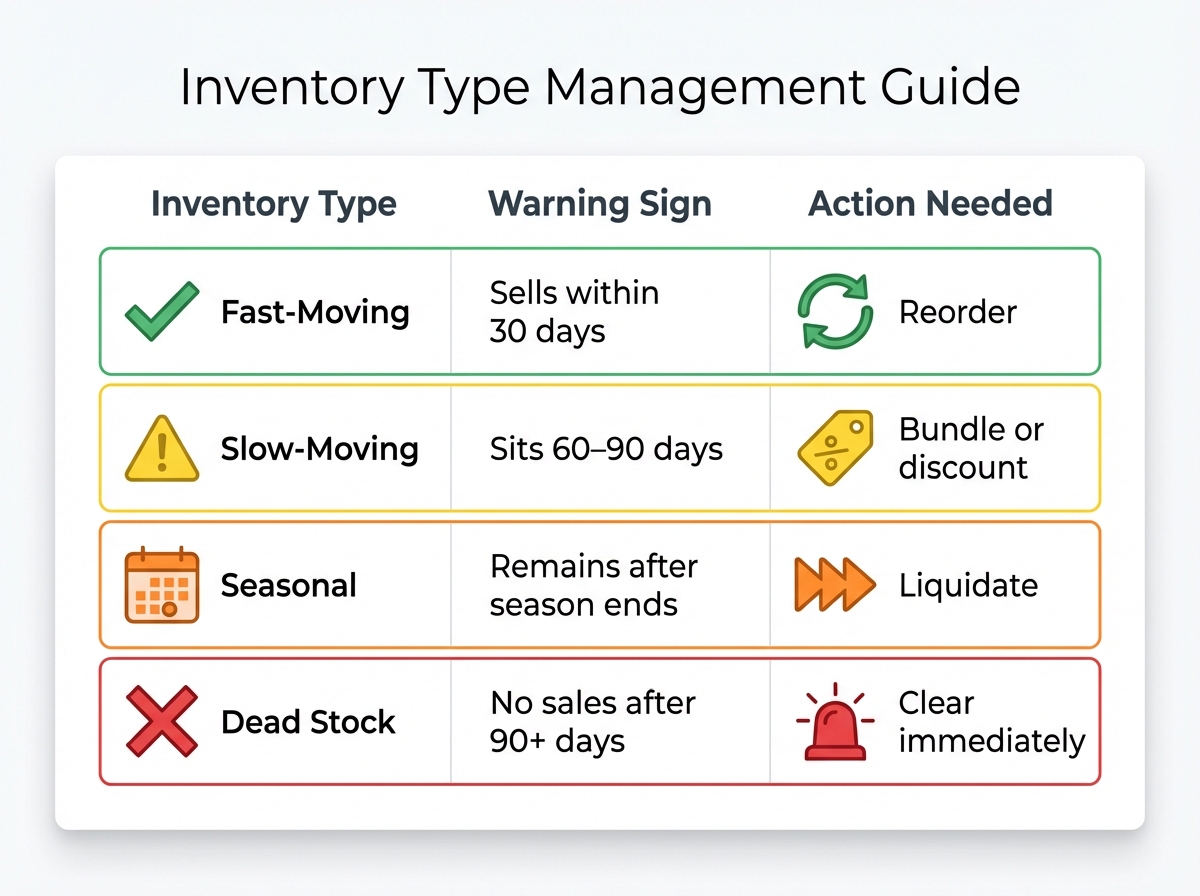
Inventory Type Management Guide: Warning Signs and Actions
What Overstock Means and Why It Happens
In simple terms, overstock refers to having more new, unused products (still in their original packaging) than your business needs based on expected demand. Surplus inventory takes this a step further, involving much larger quantities where the supply far outweighs what customers are willing to buy. If these items remain unsold even after markdowns, they turn into dead stock.
Several common issues lead to overstock. The biggest culprit is poor demand forecasting, which can paint an overly optimistic picture of future sales. Other factors include bulk ordering requirements that force you to buy more than necessary to meet supplier minimums and seasonal timing mistakes - like ending up with leftover Halloween costumes in November or Christmas decorations in January. Additionally, product lifecycle changes, such as the release of a new version that makes an older model obsolete, and external disruptions like canceled orders or shifting consumer habits, can quickly turn inventory into a costly mistake.
Understanding what drives overstock is the first step to grasping its financial consequences.
How Overstock Affects Your Business Finances
Excess inventory can be a major financial burden. First, it ties up your cash in unsold goods, leaving you with less money for critical needs like marketing, product development, or day-to-day operations. Every unsold item sitting on a shelf represents money you can’t use elsewhere.
On top of that, storage costs pile up fast. You’re paying for warehouse space, insurance, labor, and even property taxes on inventory that isn’t generating revenue. Then there’s margin erosion - to clear out overstock, you may have to resort to heavy discounts or liquidation sales, often recovering only a fraction of your initial investment. To put this into perspective, overstock cost global retailers around $1.1 trillion in lost revenue in 2015. Post-pandemic disruptions made things even worse, with retailers holding onto an estimated $8 trillion worth of unsold inventory worldwide.
Addressing these financial challenges starts with identifying where the problems lie.
How to Measure and Identify Overstock Problems
One way to tackle overstock is by categorizing your inventory into four groups: fast-moving, slow-moving, seasonal, and dead stock. This breakdown makes it easier to decide which items need immediate attention and which can wait.
Another useful tool is aging reports, which track how long items have been sitting in your warehouse. Any product that hasn’t sold in over 90 days should raise a red flag. Keeping an eye on demand trends can also help you spot items with declining interest or shorter shelf lives. If quality items aren’t selling, it might be time to revisit your pricing strategy - are your prices aligned with what customers see as fair value?
Here’s a quick reference to help you manage inventory:
| Inventory Type | Warning Sign | Action Needed |
|---|---|---|
| Fast-Moving | Sells within 30 days | Reorder |
| Slow-Moving | Sits 60–90 days | Bundle or discount |
| Seasonal | Remains after season ends | Liquidate |
| Dead Stock | No sales after 90+ days | Clear immediately |
Lastly, watch out for warehouse congestion. When old inventory clogs up space, making it hard to process new shipments, it’s a clear signal that overstock is becoming a problem.
How to Plan Your Overstock Sale Strategy
Set Your Goals and Understand Your Limits
Start by figuring out what you want to achieve. Are you aiming to clear out warehouse space, generate quick cash, or cut losses on items that are close to expiring or becoming outdated? Each goal will shape your approach. For instance, if freeing up space is your priority, you might focus on aggressive discounts. On the other hand, if cash recovery is your main concern, you’ll need to balance pricing to ensure speed and value.
Also, keep an eye on any restrictions. Some manufacturers have Minimum Advertised Price (MAP) policies, which limit how low you can publicly price items. Violating these agreements can hurt your relationship with distributors. In such cases, private B2B sales channels can help you move inventory discreetly while maintaining your brand’s reputation.
Once you’ve set your goals and identified any limits, it’s time to decide which sales channels fit your strategy.
Choose the Right Sales Channels
Different sales channels work better for different kinds of overstock. If you need to move large quantities quickly, wholesalers are a reliable option - they can take large batches off your hands, providing instant cash flow and freeing up storage space. Discount retailers are another option, offering a way to reach budget-conscious shoppers through established off-price networks. If your product still holds value in international markets, exporters can help you tap into those opportunities.
Public platforms like Amazon and eBay are also worth considering. These marketplaces attract massive audiences - Amazon and eBay together see about 290 million unique U.S. visitors every month. However, if you want to protect your pricing strategy, private B2B platforms are a safer bet. They connect you with verified bulk buyers while keeping your pricing under wraps.
Once you’ve picked your sales channel, the next step is figuring out how to price your inventory effectively.
How to Price Your Overstock Inventory
Pricing overstock is a balancing act. Price too high, and your inventory might sit for too long, racking up storage costs. Price too low, and you risk losing potential profit. The sweet spot lies in pricing based on market demand rather than the original cost.
Your pricing strategy should align with your primary goal. If clearing space is the focus, lower prices might make sense. If maximizing cash recovery is the goal, you’ll need a more calculated approach. Tiered discounting can help - offering bigger discounts for larger purchases encourages bulk orders. For instance, you might offer a 10% discount for 25 units, 20% for 50 units, and 30% for 100 or more. Another option is product bundling, where you pair slow-moving items with popular ones to boost perceived value. Flash sales can also be effective, creating urgency that drives quick sales.
Before setting prices, calculate your minimum acceptable price - this is the lowest price that still covers your costs while staying competitive. Include all relevant expenses, like storage, distribution, and any additional costs the buyer might face when reselling. Keep in mind that overstock typically sells for a fraction of its original MSRP, so it’s important to adjust your expectations accordingly.
"Setting prices too high for excess inventory can deter buyers, limiting sales opportunities and prolonging holding costs." - Gregg Schwartz, Founder & VP, Overstock Trader
How to Run Your Overstock Sale
Once you've got a clear plan in place, it's time to roll up your sleeves and get your inventory ready for sale.
Prepare Your Inventory for Sale
Start by auditing your warehouse to pinpoint items that are slow-moving, seasonal, or nearing expiration. Sort them into categories like fast-moving, slow-moving, seasonal, or obsolete based on their age, demand, and realistic resale value.
Next, inspect every unit for issues like defects, damaged packaging, or missing accessories. Address these problems before listing - whether that means repackaging or making minor repairs. Create a detailed manifest for each item, including its brand, size, MSRP, and condition. This step is especially important for international sales, as customs officials rely on this information to clear shipments.
When listing your products, make sure to use clear, optimized images and descriptive titles. Be specific about the product's category, model, and intended use. For instance, instead of a generic title like "Office Chair", go with something like "Herman Miller Aeron Ergonomic Office Chair – Size B – Black." This level of detail not only boosts search visibility but also attracts serious buyers. Considering that 98% of retailers face overstock issues, presenting your products professionally can make a big difference.
"Inventory liquidation isn't a sign of failure; it's a strategic adjustment to market realities, helping you avoid the sunk cost fallacy." – Gregg Schwartz, Founder & VP, Overstock Trader
Once everything is inspected and documented, you can use tools like Forthclear to streamline the selling process.
Use Forthclear to Sell Overstock Inventory
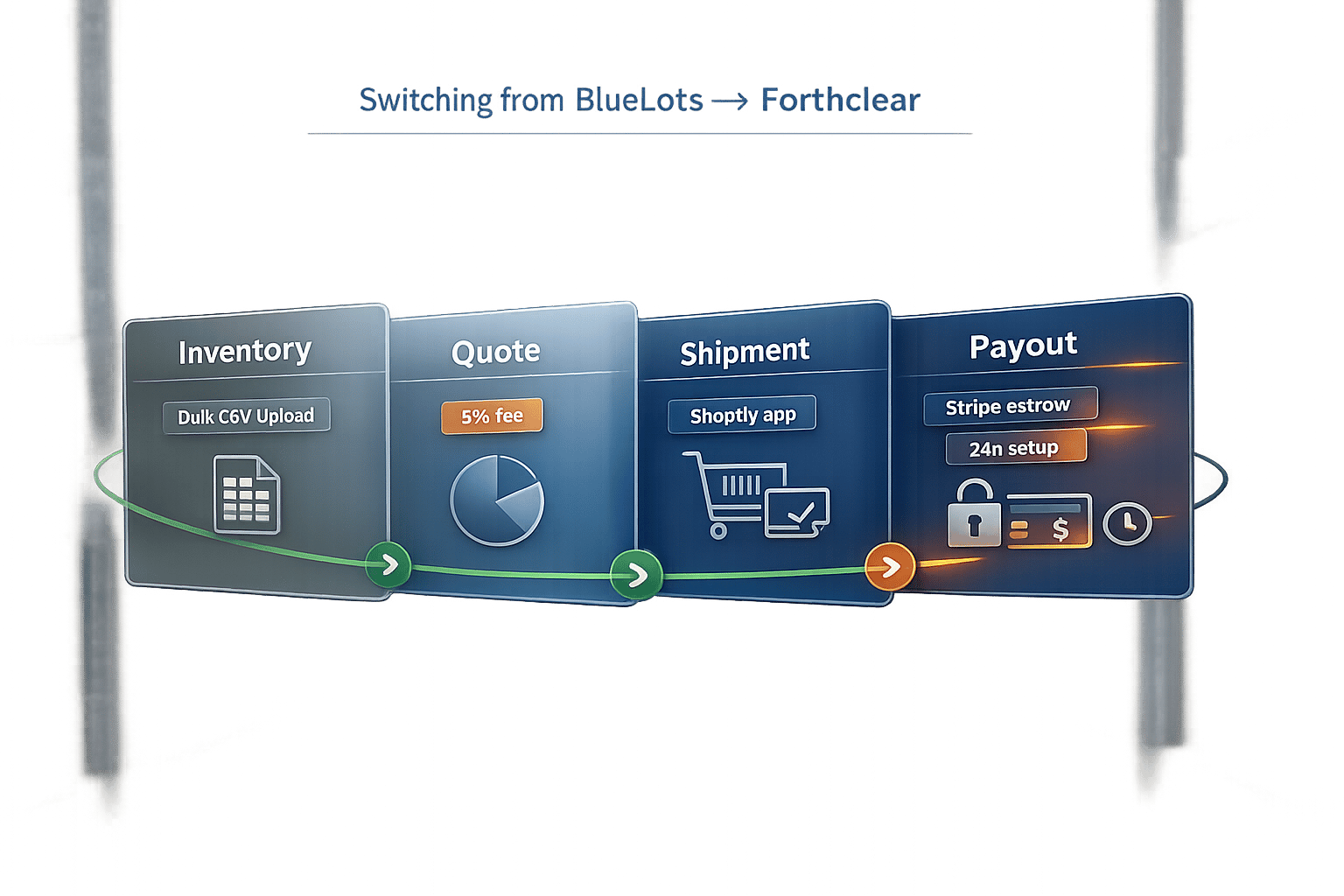
Forthclear takes the hassle out of selling overstock. If you use Shopify, the platform integrates seamlessly with your store, automatically scanning your inventory for items that haven't sold in over 60 days. You can list these products in minutes, skipping the need for manual data entry. Not on Shopify? No problem - upload your inventory via CSV or Excel. Forthclear even has an Auto Image Search feature to find product photos for you, saving you valuable time.
The platform connects you with verified bulk buyers actively searching for surplus inventory. You can set tiered pricing to encourage larger orders, such as offering 10% off for 25 units or 20% off for 50 units. Transactions are protected by Stripe escrow payments, which hold funds until delivery is confirmed, eliminating risks like fraud or non-payment.
If you're selling internationally, Forthclear has you covered with built-in tariff estimates. This feature helps you confidently price items for overseas buyers without worrying about unexpected customs costs. With no upfront fees and only a 5% platform fee on sales, it's a low-risk option for first-time sellers testing the waters.
Once you've listed your inventory and secured interest from bulk buyers, it's time to focus on shipping and customs for a smooth transaction.
Handle Shipping and Customs for International Sales
Selling internationally requires extra attention to logistics. Work with exporters or use manifested lots to streamline customs clearance. A digital manifest with details like brand, size, MSRP, and condition is critical, as customs officials use this information to verify your shipment's value and contents. Inaccurate or incomplete paperwork can lead to border delays, frustrating buyers and complicating your sale.
For heavy items like furniture, securing freight contracts in advance is a smart move. For example, a commercial pallet shipping quote from Ohio to California was around $850 in late 2025. Pre-negotiated rates can protect your margins from fluctuating fuel surcharges. On the other hand, lightweight items such as bedding or apparel are often better suited to standard parcel services like Pirate Ship, which can offer more affordable international shipping options.
Always compare shipping rates using calculators to find the best deal, whether through platform-provided options or third-party couriers. This step ensures your sale remains profitable after accounting for platform fees and shipping costs. Industries like furniture and mattresses see an annual return rate of about 15%, creating a strong secondary market for overstock. With efficient shipping and proper customs documentation, you can turn surplus inventory into a profitable opportunity.
How to Prevent Future Overstock Problems
Clearing out overstock is just one part of the equation. To truly maintain your cash flow and keep your warehouse running efficiently, you need to focus on strategies that stop overstock problems before they start. Taking proactive steps can help reduce the chances of excess inventory piling up again.
Improve Your Demand Planning
Preventing overstock starts with understanding demand. By analyzing your historical sales data, you can spot trends and align your inventory levels with actual customer needs. Look into what sold well during certain seasons, which products consistently underperformed, and how external factors like economic shifts or consumer preferences impacted your sales.
Gregg Schwartz, Founder & VP of Overstock Trader, notes, "The primary cause of having too much inventory is most often an inaccurate estimation of customer demand."
Seasonality plays a huge role here. For example, if you sell outdoor furniture, you know spring is your peak season while fall sees a dip. Instead of maintaining the same stock year-round, adjust your orders to match these patterns. Avoid the temptation of bulk discounts unless your data shows you can sell the excess. You might also explore options like pre-orders or made-to-order models to gauge interest before committing to large stock orders. Strengthening your supplier relationships can also help minimize lead times and reduce procurement errors.
Use Technology to Manage Inventory
Once you’ve improved your planning, technology can take your inventory management to the next level. Modern inventory systems can automatically track stock levels, categorize items, and even adjust pricing based on sales trends. These tools can help you identify slow-moving products early, reducing the need for drastic markdowns later. By grouping inventory into categories - like fast-moving, seasonal, and obsolete - you can make smarter decisions about what to order and when.
Track the Right Metrics
Metrics are your early warning system for overstock issues. Start by keeping an eye on your inventory turnover ratio, which measures how often you sell and replace stock over a given period. A declining turnover rate is a sign that products are sitting too long. Similarly, sales velocity - how quickly individual items sell - can alert you to a slowdown before it becomes a bigger problem.
Other key metrics include your recovery percentage, which shows how much of your original investment you recoup from unsold goods. This helps you understand the financial impact of overstock and set realistic recovery goals. Don't forget to track holding costs, like warehousing fees, insurance, and the lost opportunities tied to unsold items. Monitoring these costs ensures you can act on slow-moving inventory before it eats into your profits.
Conclusion: Get More Value From Your Overstock Sales
Pairing thoughtful demand planning with strategic sales tactics ensures your overstock sale does more than just clear excess inventory - it helps recover profits. A well-executed overstock sale can reclaim value while maintaining healthy cash flow. Use your inventory segmentation to guide your strategy, determining which items require steep discounts and which could be sold through alternative avenues like B2B marketplaces or international exporters.
Pricing and channel selection play a major role here. Strategies like tiered discounts, bundling slow-moving items with moderately popular products, and running flash sales can increase cart value and accelerate turnover. When combined with technology, these approaches become even more efficient.
Automation tools can simplify the process. For instance, Forthclear identifies products that haven’t sold in over 60 days and connects you with verified bulk buyers through a secure escrow system. With free listings and only a 5% platform fee on sales, it eliminates upfront costs while helping you reach buyers actively seeking surplus inventory.
The key to turning surplus into an opportunity lies in proactive planning, leveraging the right tools, and acting before overstock becomes a bigger issue. By combining smart pricing, multi-channel selling, and better demand forecasting, you can shift surplus inventory from a financial drain to a manageable, even profitable, asset.
Want to turn your surplus into profit? Start today by listing your inventory on Forthclear - it’s free to list, with just a 5% platform fee. Take the first step toward transforming excess stock into revenue.
FAQs
What’s the difference between overstock, surplus inventory, and dead stock?
Overstock refers to unsold products resulting from overproduction or canceled orders. These items are typically in great condition and still hold their market value. Surplus inventory, on the other hand, includes extra stock that exceeds demand. Its condition can vary depending on factors like age or how it’s been handled. Lastly, dead stock consists of items that haven’t sold for a long time - often over 90 days. These products usually have little to no market value and may even be outdated or damaged.
Understanding these distinctions is crucial for merchants looking to manage their inventory efficiently.
How do I calculate the minimum price I can accept in an overstock sale?
To determine the lowest price for an overstock sale, start by examining all your costs. This includes the purchase price, storage fees, and handling expenses. Next, take into account factors like market demand, competitor pricing, and the condition of your inventory. This helps you strike the right balance - avoiding prices that are too low or too high.
Your goal should be to set a price that covers your costs while staying appealing to potential buyers. Keep an eye on sales data and market trends regularly. This ensures your pricing remains competitive and helps you maximize revenue.
What paperwork do I need to sell overstock internationally without customs delays?
To prevent customs delays, make sure you have all the essential paperwork ready. This includes export invoices, packing lists, certificates of origin, and any necessary customs declarations, such as EEI (Electronic Export Information) or AES (Automated Export System) filings. Since requirements can differ depending on the destination, it's crucial to check the specific regulations for the country you're shipping to. Having accurate and complete documentation helps ensure a hassle-free customs clearance process.