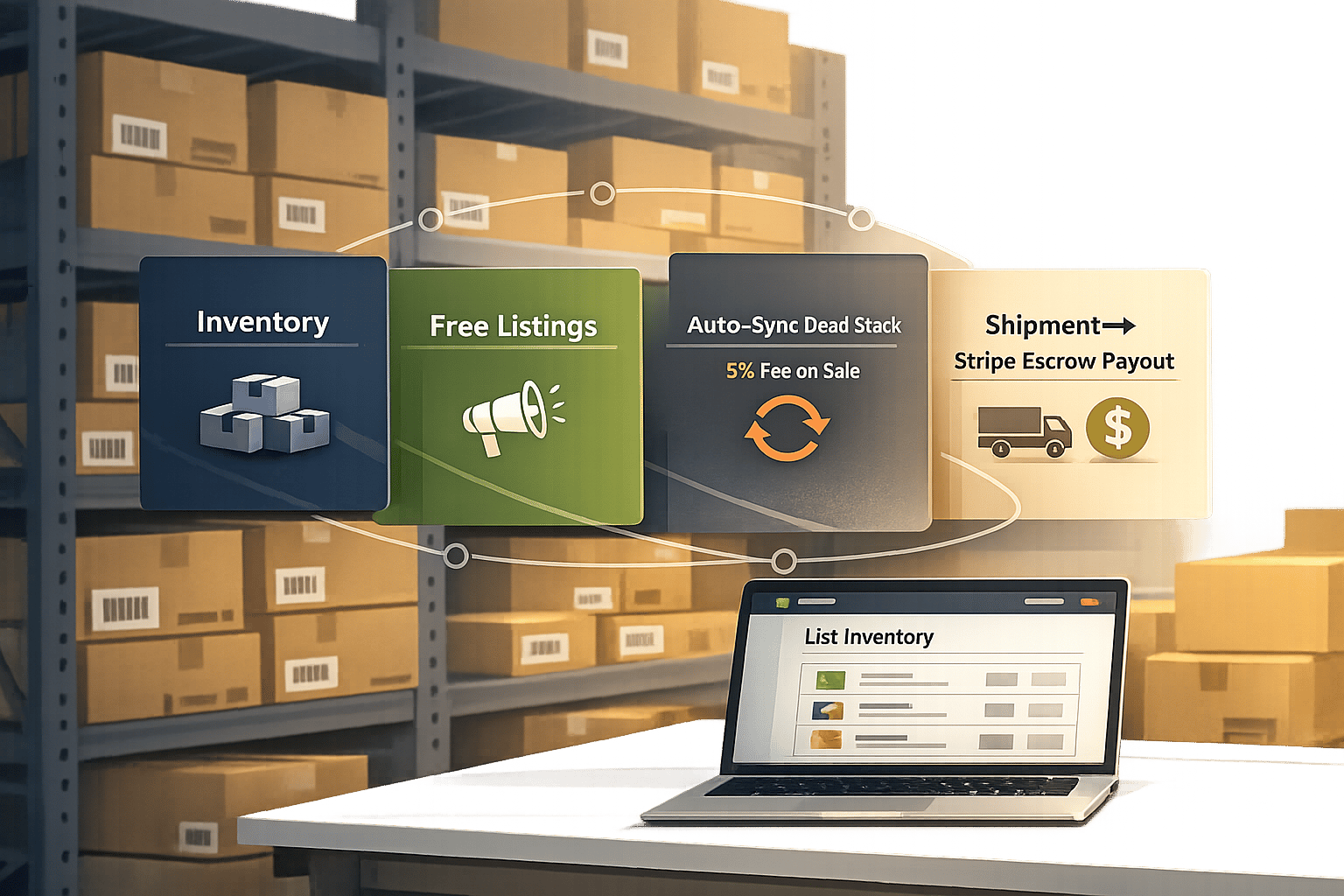
If surplus inventory is eating up your warehouse space and cash flow, the solution might not be a physical "overstock warehouse near me" but smarter liquidation strategies. Overstock and returns can account for 11–25% of warehouse space, costing U.S. retailers $850 billion annually in returns alone. Dead stock - items that don’t sell even at discounts - drains resources further.
Key Takeaways:
- Overstock warehouses hold excess goods like seasonal leftovers or unsold stock, often sold at 10–70% below retail value.
- Physical warehouses pose challenges for e-commerce sellers, including travel, equipment needs, and middleman markups.
- Tools like Forthclear automate inventory liquidation, saving time and reducing costs. Features include:
- Auto-detecting dead stock (60+ days unsold).
- Free listings with a simple 5% fee on completed sales.
- Secure transactions via Stripe escrow.
- Access to a global buyer network for better pricing.
Instead of relying on outdated methods, platforms like Forthclear help e-commerce sellers turn overstock into cash quickly and efficiently.
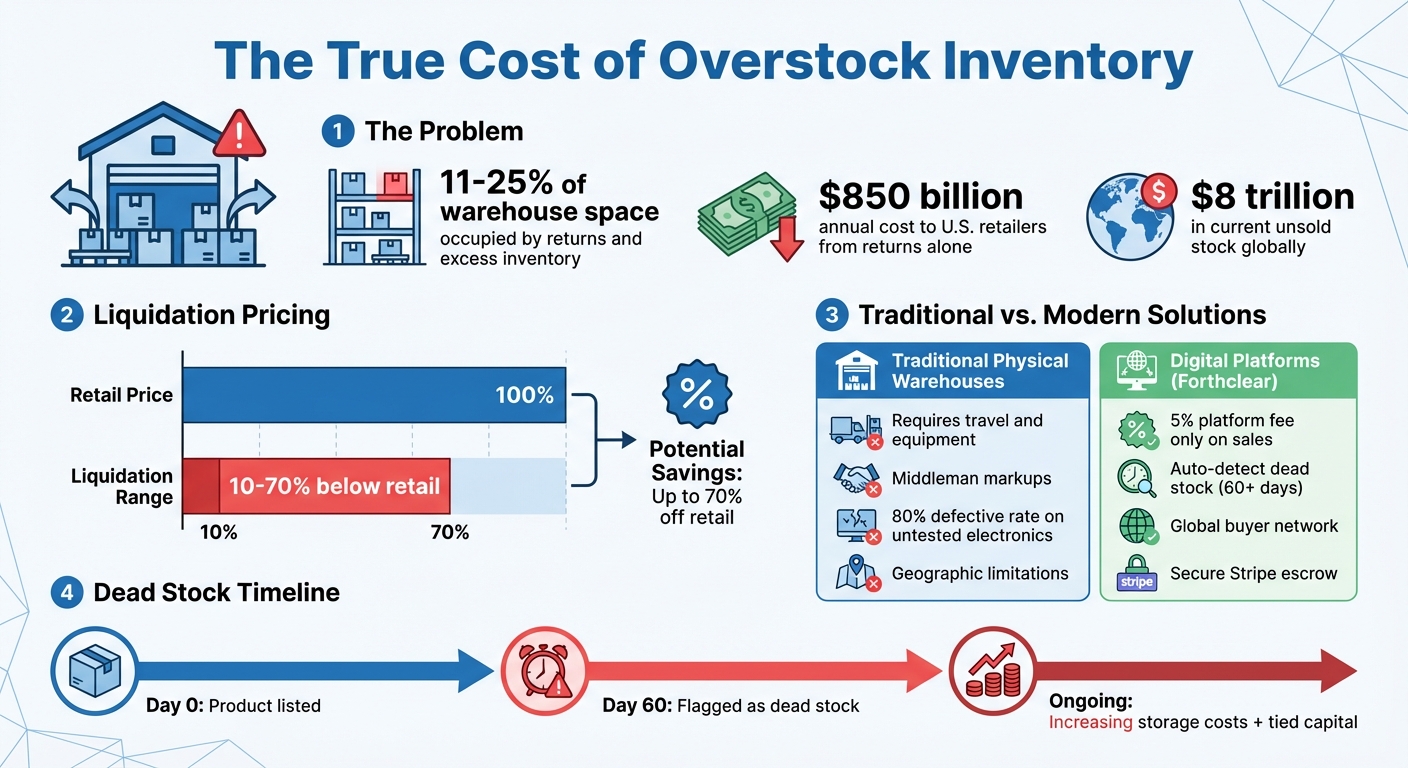
Overstock Inventory Statistics and Cost Breakdown for E-commerce Retailers
What Overstock Warehouses Are and How They Work
Definition of an Overstock Warehouse
An overstock warehouse is a storage facility for surplus goods that retailers couldn't sell through their usual channels. These items often include seasonal products that missed their prime selling period, over-ordered stock, and "shelf-pulls" - products removed from shelves to make room for new arrivals.
The inventory in these warehouses is typically brand-new, unopened, and ready for resale. Items arrive in their original factory-sealed cartons, often with manufacturer warranties still valid. This quality is why these facilities are sometimes called "closeout warehouses" or "liquidation hubs." They play a key role in reverse logistics, helping major retailers like Amazon, Walmart, and Target clear out surplus stock while reclaiming valuable warehouse space.
The Warehouse Process Explained
The process starts with retailers sending their excess inventory to these warehouses to free up room in their main distribution centers. Once the merchandise arrives, the warehouse organizes it into pallets or truckloads and sells it to resellers through online auctions, fixed-price listings, or direct negotiations.
To help buyers make informed decisions, warehouses provide manifests - detailed spreadsheets listing the contents of each pallet. This helps buyers avoid "dead stock", such as expired products or broken electronics. Many warehouses also use a "soft close" auction system, where the timer resets in the final minutes to discourage last-second bidding.
Liquidation prices can be as low as 10% of the original retail value, and buyers often save up to 70% off retail prices when purchasing through these channels. However, much of the inventory is sold "as-is" or "untested", meaning items may not have been inspected and could include defective products.
Why Physical Warehouses Don't Work for E-commerce
For online sellers, physical warehouses pose several challenges. One major issue is the need for in-person inspections, where buyers are expected to assess the merchandise quality themselves. This requirement can be a logistical nightmare for remote e-commerce businesses.
Geographic limitations also cut into profits. Long travel distances - sometimes requiring hours on the road - can make even a small profit disappear once you factor in gas, time, and vehicle wear and tear.
Another hurdle is equipment compatibility. Physical warehouses often deal with double-stacked pallets or truckloads, which require specialized vehicles like box trucks and access to industrial loading docks. Most small e-commerce sellers, however, operate with standard vehicles that can't handle such loads.
Finally, many traditional liquidators act as middlemen, adding markups that further eat into potential profits. When combined with the logistical difficulties of physical warehouses, these factors make them an inefficient option for e-commerce sellers looking to profit from surplus inventory. Up next, we’ll look at how to identify overstock and dead stock in your inventory.
sbb-itb-bc600a0
How to Find Overstock and Dead Stock in Your Inventory
Warning Signs of Overstock
One of the biggest indicators of overstock is time. If items have been sitting in your warehouse for more than 60 days without selling, they’re likely overstock. This not only ties up your capital but also prevents you from investing in products with better sales potential.
Another sign is seasonal leftovers. Holiday-specific items like Christmas decorations or Halloween costumes that remain unsold after the season ends should be flagged immediately. These products won’t regain value and only take up space that could be used for newer inventory.
You should also pay attention to failed markdowns. If price reductions don’t move certain products, those items become what’s often referred to as "dead merchandise". These are the products that fail to attract buyers, even at discounted prices.
"When 11-25% of your warehouse space sits occupied by returns and excess inventory, you're losing capacity, velocity, and money every day."
– B-Stock Editorial Team
The financial impact of overstock is massive. Retailers are currently dealing with $8 trillion in unsold stock. Overstock not only clogs your warehouse but also limits space for products that could generate faster sales. The key is to differentiate between inventory that’s slow-moving and items that are completely stagnant.
Dead Stock vs. Slow-Moving Products
Once you’ve identified overstock, it’s important to separate slow-moving inventory from dead stock.
Dead stock refers to items that haven’t sold at all, even after markdowns. These products have zero sales velocity, tying up your capital unless liquidated.
Slow-moving inventory, on the other hand, still generates some sales, just not at the expected pace. While slow-movers might respond to strategies like bundling or adjusted pricing, dead stock often requires immediate action to free up warehouse space.
Dead stock is especially urgent because it doesn’t just represent lost sales - it also increases storage costs, further cutting into your margins.
Using Sales Data to Identify Problem Inventory
After spotting the warning signs and classifying your inventory, sales data can help confirm which items need immediate attention.
Start by analyzing sales velocity and comparing actual performance against projections to highlight underperforming SKUs. For example, tools like Shopify’s inventory reports can help you identify SKUs with no sales for over 60 days. Automated tools, such as Forthclear’s auto-detect feature, make this process even easier by flagging problem inventory without manual effort.
It’s also essential to compare your sales data with market trends. Sometimes, a product’s decline isn’t due to your pricing or marketing but rather a shift in consumer preferences or the release of a newer version. Acting quickly in these cases can help you move inventory before its value drops further.
Lastly, keep an eye on your inventory turnover rate. A low turnover rate indicates that too much capital is stuck in unsold stock instead of being reinvested into faster-selling products.
"Overstock inventory refers to items in stock for an extended period and not selling as quickly as anticipated."
– Gregg Schwartz, Founder & VP, Overstock Trader
Beyond the Closeout: How Excess Inventory Became Retail’s Power Play
How Forthclear Automates Overstock Recovery
Forthclear takes the hassle out of liquidating excess inventory by automating the entire process. Once you've pinpointed the inventory that's holding you back, the next step is to move it - fast. Every day that overstock sits in your warehouse eats into your cash flow, and manually managing liquidation can drain time better spent growing your business. That’s where Forthclear comes in. Through its B2B marketplace, it connects you directly with verified bulk buyers, saving you both time and effort.
By integrating directly with your e-commerce system, Forthclear streamlines the process from beginning to end. Forget about spending hours creating listings or chasing buyers. Instead, Forthclear takes care of the heavy lifting while still allowing you to control pricing and decide which items to sell.
Auto-Detect Feature for Dead Stock
Forthclear's Shopify app simplifies inventory management by automatically identifying dead stock - products that haven’t sold in the past 60 days. No more sifting through endless sales reports; the app scans your inventory history and flags these items as candidates for liquidation. From there, you can review and list them in just a few clicks.
This feature is particularly useful for businesses managing large SKU counts. Instead of relying on outdated spreadsheets or guesswork, you get clear, data-backed recommendations on which items are tying up your capital. The 60-day benchmark aligns with standard practices for recognizing stagnant inventory, helping you act before storage costs climb higher. Once those products are flagged, listing them becomes a quick and effortless next step.
How to List Inventory on Forthclear
Forthclear makes listing your surplus inventory a breeze, offering three simple methods:
- Shopify Integration: If you’re on Shopify, the platform syncs directly with your store, pulling product data automatically - no manual input needed.
- Bulk CSV Upload: For merchants using other platforms, the CSV upload tool lets you import inventory in minutes.
- Auto-Image Search: The platform even finds suitable product photos for you, eliminating hours of manual work.
Once your items are listed, you can set a minimum price, decide whether to accept offers, and let Forthclear handle the rest. The best part? There are no upfront listing fees. You only pay a 5% platform fee when a sale is successfully completed.
Payment Security and Buyer Verification
Forthclear ensures every transaction is secure by using Stripe escrow. When a buyer makes a purchase, their payment is held until you confirm shipment and the buyer acknowledges delivery - or after 14 days if there’s no dispute. This setup protects you from payment fraud and guarantees you’re not shipping goods without payment assurance.
Additionally, all buyers on the platform are thoroughly vetted to ensure they are reputable B2B entities. This reduces the risk of dealing with unreliable buyers and ensures you’re connecting with businesses capable of handling bulk purchases, not casual shoppers looking for individual deals.
Ready to turn your surplus inventory into cash? Visit Forthclear today to list your products with a simple 5% platform fee. For more tips on managing excess inventory, explore the Overstock Clearance Guide.
Getting Better Returns with Forthclear's Pricing and Buyer Network
If you're a merchant tired of the pitfalls of traditional overstock warehouses, improving your return rates is likely a top priority. Every percentage point counts when it comes to recouping value from surplus inventory. Unfortunately, many liquidation channels eat into your profits with subscription fees, middleman markups, and hidden charges. Enter Forthclear, a platform designed to shift the dynamic: you only pay when you succeed, and you gain access to a global network of verified buyers.
Here’s how it works: listing inventory is completely free, and you’re only charged a 5% platform fee when a sale is finalized. Considering that U.S. retailers lose around $850 billion annually to returns - about 17% of total sales - even small improvements in recovery rates can make a big difference. Let’s dive into how Forthclear’s pricing model and international buyer network can help you maximize your returns.
5% Platform Fee Pricing
Forthclear’s pricing is refreshingly simple. You pay a flat 5% fee on completed sales - no upfront costs, no monthly subscriptions, and no hidden fees. This performance-based approach means you’re only charged when a sale puts money in your pocket.
Compare this to platforms like Amazon or eBay, where professional sellers often face subscription fees and referral fees that can climb to 15% or more depending on the product category. Add in extra charges for services like Fulfillment by Amazon - covering storage, packing, and even long-term surcharges - and your total fees can quickly balloon to over 30% of your sale price. Forthclear’s straightforward model ensures more of your revenue stays where it belongs: with you.
Selling to International Buyers
Forthclear’s global buyer network gives you access to markets beyond domestic borders, which can be a game-changer. International buyers may place a higher value on inventory that’s oversaturated in your local market, allowing you to secure better prices. Plus, the platform includes built-in tariff estimates for cross-border transactions, so you can confidently provide quotes without worrying about surprise customs fees. Selling internationally not only boosts your returns but also helps clear inventory faster by connecting you with buyers who truly need your products.
Bulk Pricing and Direct Negotiation
The platform also lets you set tiered discounts to encourage bulk purchases and negotiate deals directly through its messaging system. For instance, you could offer a 10% discount for buyers ordering 50 units or a 20% discount for orders of 100 or more. This flexibility allows you to move inventory faster, reducing storage costs and freeing up capital. Sometimes, accepting a slightly lower price today can be smarter than holding out for a marginally higher offer tomorrow.
Ready to turn your overstock into revenue? With Forthclear’s transparent 5% fee and global buyer network, you can transform surplus inventory into cash. Visit Forthclear to learn more, or check out their comprehensive guide to overstock recovery here. Up next, we’ll tackle frequently asked questions to help you make informed decisions about liquidating your inventory.
Conclusion
Searching for an "overstock warehouse near me" might seem like a quick fix for managing surplus inventory, but for e-commerce sellers, it often creates more problems than it solves. Physical warehouses eat up storage space and drain cash daily. Add to that the hassle of renting trucks, spending hours on the road, and dealing with "untested" lots where up to 80% of electronics could be defective. It's easy to see why this approach is far from scalable.
This is where a smarter solution comes into play. Forthclear eliminates these inefficiencies by offering an automated platform that connects you with verified bulk buyers. Features like Auto-Detect for dead stock and secure transactions through Stripe escrow take the guesswork out of liquidation. No more blind lots, no unnecessary travel - just a global network ready to value your inventory.
With U.S. retailers losing billions every year due to returns, recovering even a small percentage of that can make a big difference. Forthclear’s simple 5% platform fee ensures you only pay when you make a sale, keeping more of your capital in your business instead of wasting it on subscriptions or middlemen.
Want to turn your surplus inventory into cash flow? Head over to Forthclear to start listing for free. You can also check out their overstock recovery guide for more detailed strategies. Your warehouse should be for active inventory - not dead stock. Clear the clutter, focus on growth, and let Forthclear help you streamline surplus recovery while boosting profitability.
FAQs
How do I find dead stock in my inventory fast?
To spot dead stock quickly, leverage inventory management tools such as aging reports to identify items that are slow-moving or outdated. Consistently reviewing sales data and turnover rates is another effective way to detect unsold products. For clearing out this inventory, consider using online liquidation platforms or partnering with local surplus warehouses. These strategies can help you free up valuable storage space and reduce potential losses.
What should I check before liquidating overstock?
Before deciding to liquidate overstock, it’s important to figure out why the excess inventory exists in the first place. This step helps you avoid repeating the same mistakes. Use tools like aging reports to pinpoint items that aren’t selling quickly and categorize them for suitable sales channels. Make sure all products are in good condition and price them competitively by checking current market trends. Additionally, take the time to verify buyers or platforms to minimize the risk of fraud. Don’t forget to review any legal and logistical requirements to ensure everything goes smoothly.
How does Stripe escrow protect my sale on Forthclear?
Stripe escrow on Forthclear adds an extra layer of security to transactions by temporarily holding the buyer's payment until the sale is finalized. This approach safeguards both buyers and sellers, reducing the risk of fraud or disputes and ensuring a smoother experience for everyone involved.